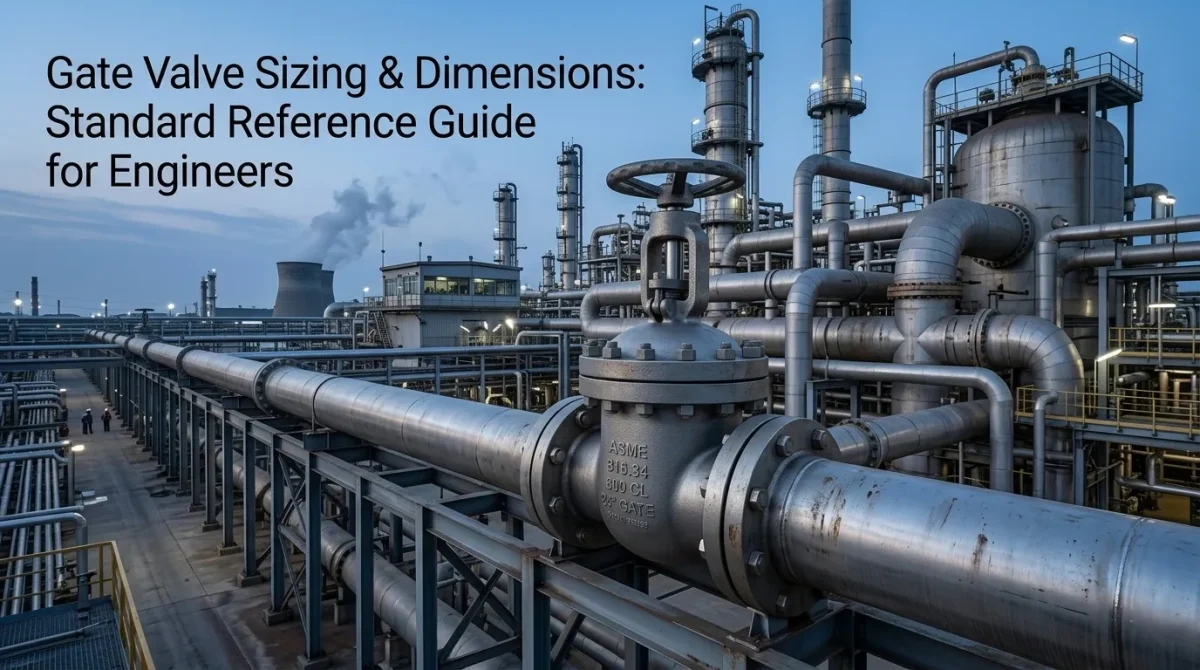












The important rule in choosing the right material for a gate valve for oil service is to prioritize how compatible it will be with pressure and temperature requirements, and fluid types.
This is because material choice not only affects how long a valve lasts and how well it seals, but it also puts the entire system at risk, especially if there is a mismatch in the intended use.
So, read on. This guide explains how WCB and WC6, among others, compare. It also highlights where each option fits in real oil and gas applications.
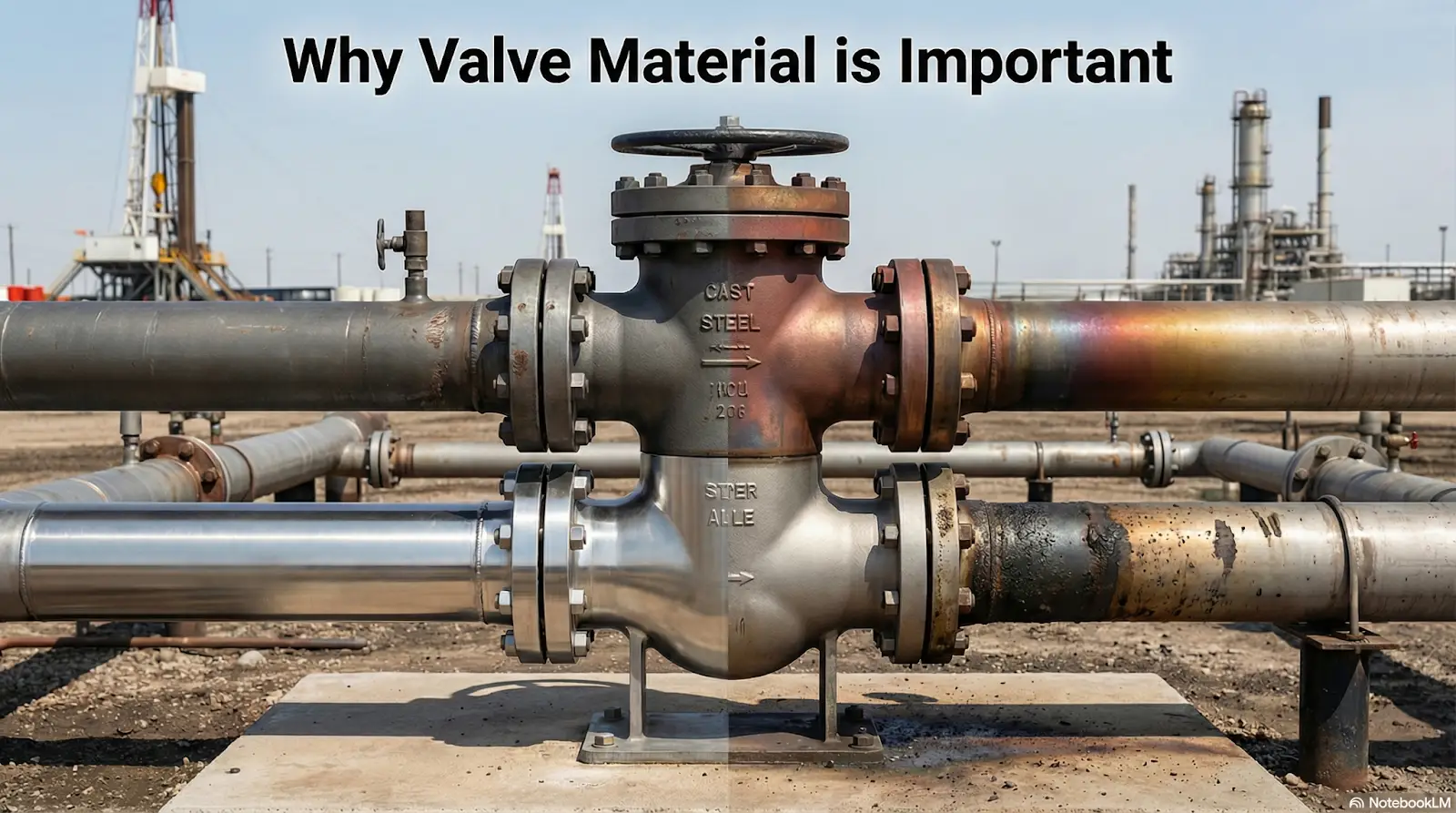
What is the Material Used in Gate Valves?
Gate valves are built using metals that are targeted towards strength and durability. The body and internal parts must withstand pressure, temperature, and fluid chemistry.
Common materials include carbon steel, alloy steel, and stainless steel, where each comes with a different level of resistance and performance.
But in oil systems, remember that the goal is to maintain sealing, prevent corrosion, and ensure long service life.
What Does WCB Mean on a Gate Valve?
WCB (or Weldable Cast Steel, Grade B) refers to cast carbon steel, a widely used material in pipeline systems. It is known for its balance between strength and cost.
A WCB gate valve is suitable for standard operating conditions. It works well in pipelines carrying clean or mildly treated oil.
This material is easy to manufacture and widely available, making it a common choice in many installations.
Why WCB is Used for Normal Temperature Oil
WCB performs optimally under moderate temperature and pressure. It provides stable mechanical strength and consistent sealing.
However, it does not handle aggressive fluids or high heat well. In corrosive environments, it may require additional protection or coating.
For standard crude oil transport, WCB remains a practical and cost-effective option.
When to Choose WC6 for High Temperature and Pressure
WC6 is an alloy steel designed for more demanding conditions. It contains chromium and molybdenum, which improve strength at higher temperatures.
A WC6 gate valve is often used in systems where heat and pressure are elevated. It maintains structural integrity even under thermal stress.
This makes it suitable for heated pipelines and processing units where carbon steel may not perform well.
Quick Guide: Comparing Valve Materials for Various Conditions
| Material | Temperature Range | Hydrogen Sulfide Resistance | Corrosion Resistance | Cost Level |
| WCB (Cast Carbon Steel) | Moderate | Low | Low to moderate | Low |
| WC6 (Alloy Steel) | High | Moderate | Moderate | Medium |
| Stainless Steel | Moderate to high | High | High | High |
| Nickel Alloy | Very high | Very high | Very high | Very high |
| API Cast Steel | Moderate to high | Depends on grade | Depends on material | Medium |
| API Forged Steel | High | Depends on grade | Depends on material | Medium to high |
Corrosive Oil Environments
SS steel is selected when corrosion resistance is critical. A stainless steel gate valve can withstand exposure to harsh chemicals and moisture.
It is commonly used in offshore environments and in pipelines carrying sour crude. Its resistance to rust helps extend service life, though slightly more expensive.
High Sulfur and Acidic Conditions
In severe oil environments, stronger materials are required. An alloy gate valve made from nickel-based materials offers advanced protection.
These alloys resist damage from hydrogen sulfide and acidic fluids. They also perform well under high temperatures.
This type of material is often used in critical systems where failure cannot be tolerated.
Other Options: API Cast Steel and Forged Steel
Oil and gas systems follow strict standards to ensure safety and consistency. API cast steel gate valve products are commonly used for larger sizes and general applications.
Casting allows for complex shapes and is often more cost-effective for large valves. These valves are widely used in pipeline networks.
API forged steel gate valve options are typically used for smaller sizes and higher pressure ratings. Forging improves strength and reduces internal defects.
Both types are important in oil systems, and selection depends on size, pressure, and application requirements.
Recommended Gate Valve Trim for Crude Oil
Material selection doesn’t stop at the valve body. Internal parts, known as trim, also play a key role in performance.
Most of the time, it also includes hardened surfaces, which help resist wear caused by particles in the fluid.
In corrosive conditions, stainless or alloy trim may also be required.
Balancing Safety and Cost in Material Selection
Material selection is always a balance between safety and cost. Lower-cost materials may work in simple conditions but fail in harsh environments.
Meanwhile, higher-grade materials increase upfront cost but reduce maintenance and risk. In oil systems, overall quality often outweighs initial savings.
The role of a gate valve for oil is not only to isolate flow but to do so safely over time.
Valve manufacturers that offer both API cast steel and forged steel options provide flexibility. This allows engineers to match materials with specific operating needs.
Final Thoughts on Choosing the Right Material
In oil service, where the ecosystem is harsh, valve materials are a pivotal decision.
So, to summarize:
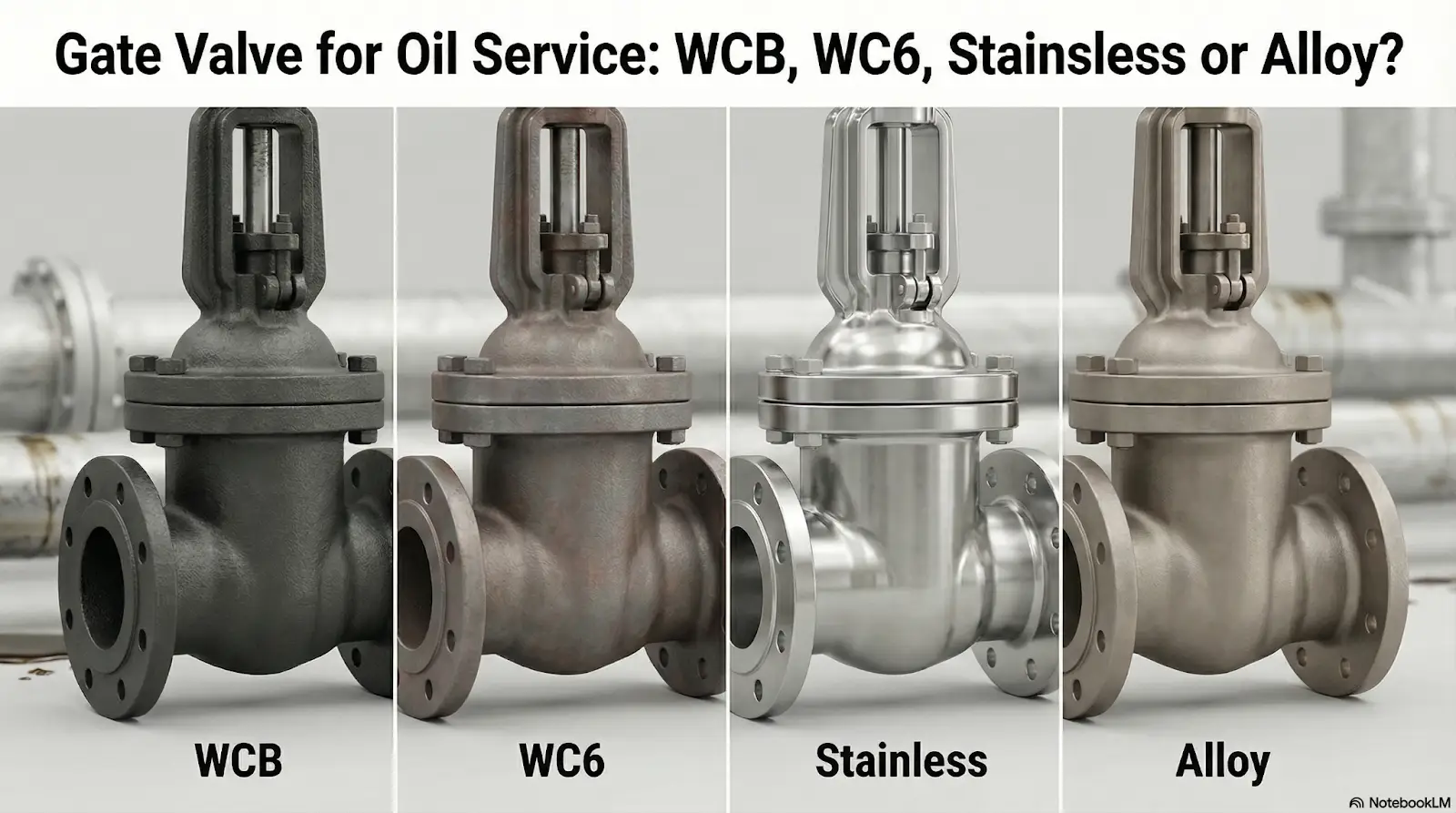
- WCB works well for standard conditions.
- WC6 handles higher temperatures and pressure.
- Stainless steel provides protection in corrosive environments.
- Alloy materials are used in the most demanding applications.
For customized material solutions, contact us for more information.
Resources:
Metallic materials for valves applied in Oil & Gas industry
Valve Material BodyTrim Carbon Stainless
Valve Materials and Applications Guide
Valve Materials: A216, A351, A182 – Projectmaterials