









For small bore applications at moderate pressure, a floating ball valve is the better choice. It costs less, requires smaller actuators, and seals reliably when the bore size stays below DN100 and the pressure class stays below Class 600. For large bore, high-pressure, or automated pipeline applications, a trunnion ball valve is the right specification. The ball is mechanically anchored by trunnions, operating torque stays consistent regardless of pressure, and the double seat arrangement protects against seat wear in ways a floating design cannot sustain at scale. The floating ball valve vs trunnion ball valve decision comes down to two variables: bore size and pressure class. Get those right, and the choice is straightforward.
How Does a Float Valve Work vs a Trunnion Design?
How does a float valve work? The ball is not mechanically fixed in position. It floats between two seats, held in place by the seats themselves and by line pressure. When the valve closes, upstream pressure pushes the ball against the downstream seat. That seat contact creates the seal. The higher the pressure, the harder the ball presses against the seat, and the tighter the seal becomes.
That self-energizing seal is the floating design’s main strength. It works well in small bore applications and moderate pressure service. But it has a physical limit. In larger bore sizes and higher pressure classes, the force pushing the ball against the downstream seat becomes large enough to cause excessive seat wear and dramatically increased operating torque. At that point, the floating design stops being practical.
Trunnion-mounted ball valves solve that problem differently. The ball is mechanically supported by trunnions, fixed shafts at the top and bottom of the ball that anchor it in position regardless of line pressure. Because the ball cannot move, the seats are spring-loaded to move toward the ball instead. Both the upstream and downstream seats maintain contact with the ball simultaneously, creating a double seal. The ball stays centered. Operating torque stays low regardless of pressure.
Ball Valve Floating vs Trunnion: Core Design Differences
Ball valve floating vs trunnion comes down to where the sealing force originates and how the ball is supported.
In a floating design, pressure drives the ball into the downstream seat. The seal is single-sided. The ball moves slightly under pressure, which is exactly what creates the seal, but also what limits the design to smaller sizes and lower pressure classes.
In a trunnion design, the ball stays fixed. Spring-loaded seats move to maintain contact with the ball from both sides. The seal is double-sided. Operating torque is consistent and manageable even at large bore sizes and high-pressure classes, where a floating design would require excessive actuator force.
Floating Ball Valve vs Trunnion Ball Valve: Side-by-Side Comparison
| Feature | Floating Ball Valve | Trunnion Ball Valve |
| Ball support | Seats hold the ball in place | Trunnions anchor the ball mechanically |
| Sealing mechanism | Pressure pushes the ball to the downstream seat | Spring-loaded seats contact the ball from both sides |
| Seal type | Single-sided | Double-sided |
| Typical bore range | DN15 to DN100 | DN50 and above |
| Pressure class | Class 150 to Class 600 typically | Class 150 to Class 2500 and above |
| Operating torque | Increases significantly with pressure and size | Consistent and lower for equivalent size |
| Automation suitability | Smaller actuators, lower cost | Better suited for large-bore automation |
| Cost | Lower | Higher |
| Applications | General service, utilities, small bore process | High pressure, large bore, pipeline, critical service |
The trunnion ball valve vs floating ball valve decision often comes down to bore size and pressure class. Below DN50 at Class 300 and under, floating designs handle most applications well and cost less. Above DN100 or above Class 600, trunnion-mounted are almost always the right specification.
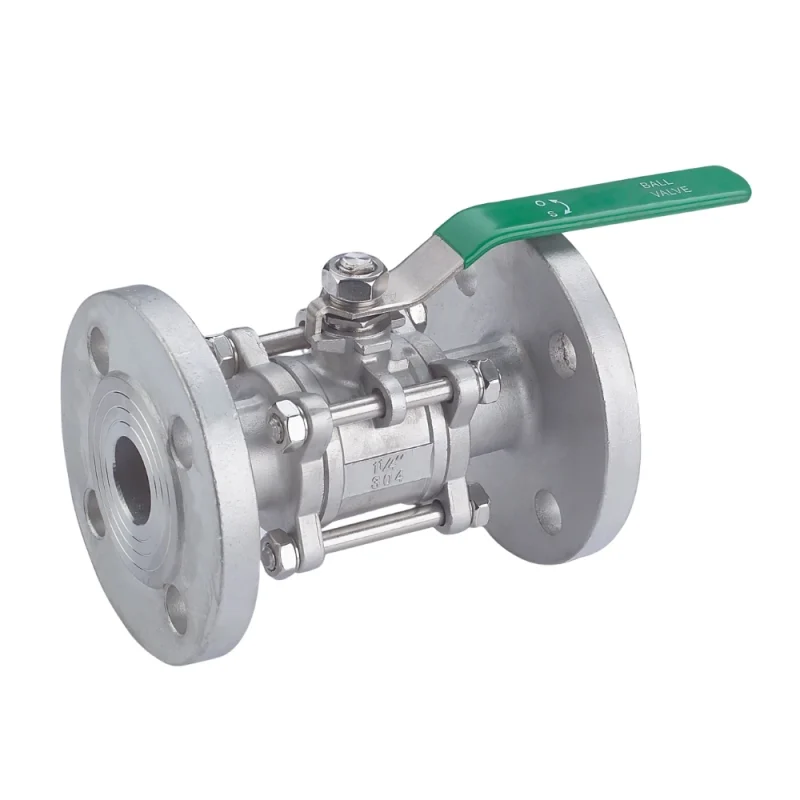
3PC Flanged Forged Ball Valve
This 3PC flanged forged ball valve is engineered for tough industrial media. With its trunnion-mounted design and robust body, it minimizes leakage and withstands pressure shocks—making it a trusted choice for chemical processing, energy plants, and fluid control systems.
- Size: DN50 – DN600
- Pressure: PN16 / PN25 / PN40 / PN64 / PN100 / PN160; 150LB – 1500LB
- Body Material: Stainless Steel (F304 / F316 / F316L), Carbon Steel (A105)
- Seat: PTFE / RPTFE / PEEK
- Connection: RF / RTJ
- Temperature: -29°C to 121°C
Trunnion-Mounted Ball Valves: When to Specify Them
These ball valves are the standard choice for several specific situations.
Large bore pipeline isolation. Oil and gas transmission pipelines use trunnion-mounted ball valves from DN100 upward because the bore size and operating pressure make floating designs impractical. The actuator force required to operate a floating ball valve at those sizes and pressures is too high to be economical.
High-pressure process service. Refinery and chemical plant applications at ASME Class 900 and above routinely specify trunnion ball valve vs floating ball valve because the double seat arrangement provides better seat protection under sustained high-pressure conditions.
Automated valve packages. Trunnion-mounted ball valves pair better with pneumatic and electric actuators in large bore automated applications because the consistent low torque means actuator sizing is more predictable. All four actuation types, manual, pneumatic, electric, and hydraulic, are available as factory-assembled packages from YKY, certified to API 6D and ISO 9001, with CNC precision machining on ball and seating surfaces and 100% testing before shipment.
Bidirectional sealing requirements. Where the flow direction can reverse or where the valve needs to seal against pressure from either side, trunnion-mounted ball valves provide inherent bidirectional sealing that floating designs cannot reliably deliver.
Application Rules of Thumb for Both Designs
Five practical rules that cover most project decisions on floating vs trunnion ball valve selection.
DN50 and below at Class 300 and under: a floating ball valve handles this well and costs less. No reason to specify trunnion at that range for standard service.
DN100 and above or Class 600 and above: start with trunnion-mounted ball valves as the default. The torque and seat wear advantages justify the cost difference at that range.
Automated large bore applications: trunnion every time. Actuator sizing is more predictable, and long-term operating cost is lower because seat wear is reduced.
Bidirectional service: trunnion. Floating designs seal reliably in one direction. Trunnion sealed designs handle both.
Budget-constrained small bore general service: floating. The simplicity and lower cost are the right tradeoff when pressure and bore size are within the floating design’s range.
YKY manufactures both floating and trunnion ball valves as core products, allowing buyers to source both from one factory to simplify procurement and documentation across mixed-spec projects. Both designs are available in carbon steel, stainless steel, and alloy steel, with full pressure and temperature ratings available on request.
Frequently Asked Questions
What is the difference between trunnion and floating ball valves?
Floating ball valves use line pressure to push the ball against the downstream seat. Trunnion ball valves mechanically anchor the ball with trunnions while spring-loaded seats contact the ball from both sides. Trunnion designs handle larger bore sizes and higher pressures with lower operating torque.
How do I know what size float valve I need?
Match the valve bore to the pipe bore and confirm the pressure class against the system’s maximum operating pressure. For floating ball valves, stay within DN100 and Class 600 for reliable performance. Above those limits, trunnion-mounted ball valves are the more appropriate specification.
Which type of valve generally handles a higher pressure drop more effectively?
Trunnion-mounted ball valves handle high-pressure drop more effectively. The mechanical ball support prevents the ball from being forced against the downstream seat under high differential pressure, reducing seat wear and keeping operating torque manageable across the valve’s service life.
Which is the best ball valve?
Neither floating nor trunnion is universally best. Floating ball valves are cost-effective and reliable for small bore, moderate-pressure service. Trunnion ball valves are the right choice for large bore, high-pressure, and automated applications where torque consistency and seat protection matter most.