







Quick Answer
Proper sizing of 2-inch flanged ball valves is critical for system efficiency, requiring consideration of port diameter, face-to-face length, flange drilling, and pressure class—not just pipe size. Selection must match flow requirements, pressure ratings, and flange standards, as higher-pressure valves have larger external dimensions. Different designs (2-way, 3-way, forged) affect installation. YKY Valve provides technical specifications and dimensional verification to help engineers select correctly, ensuring stable flow, reduced wear, and long-term performance.
Choosing the correct 2 flanged ball valve dimensions involves sealing requirements, installation fit, and the overall efficiency of the piping system.
Just like material and type selection, the right valve size contributes either to smooth system operation or damage.
For more valve sizing tips, read the article below before purchasing to avoid pressure loss, leakage risks, and unnecessary maintenance.
Why do valve dimensions matter in flanged ball valve selection?
Valve dimensions determine how well the valve fits the piping system and how effectively it handles the required flow.
A mismatch between valve size and system demand can totally reduce efficiency and create operational problems.
The dimensions of a 2-inch flanged ball valve affect the port opening, face-to-face length, flange connection, and flow capacity.
Each of these factors plays a role in maintaining proper pressure and smooth operation.
When sizing is done correctly, the valve supports stable flow while reducing wear on connected equipment.
This is why dimensional selection should always be based on actual operating conditions rather than pipe size alone.
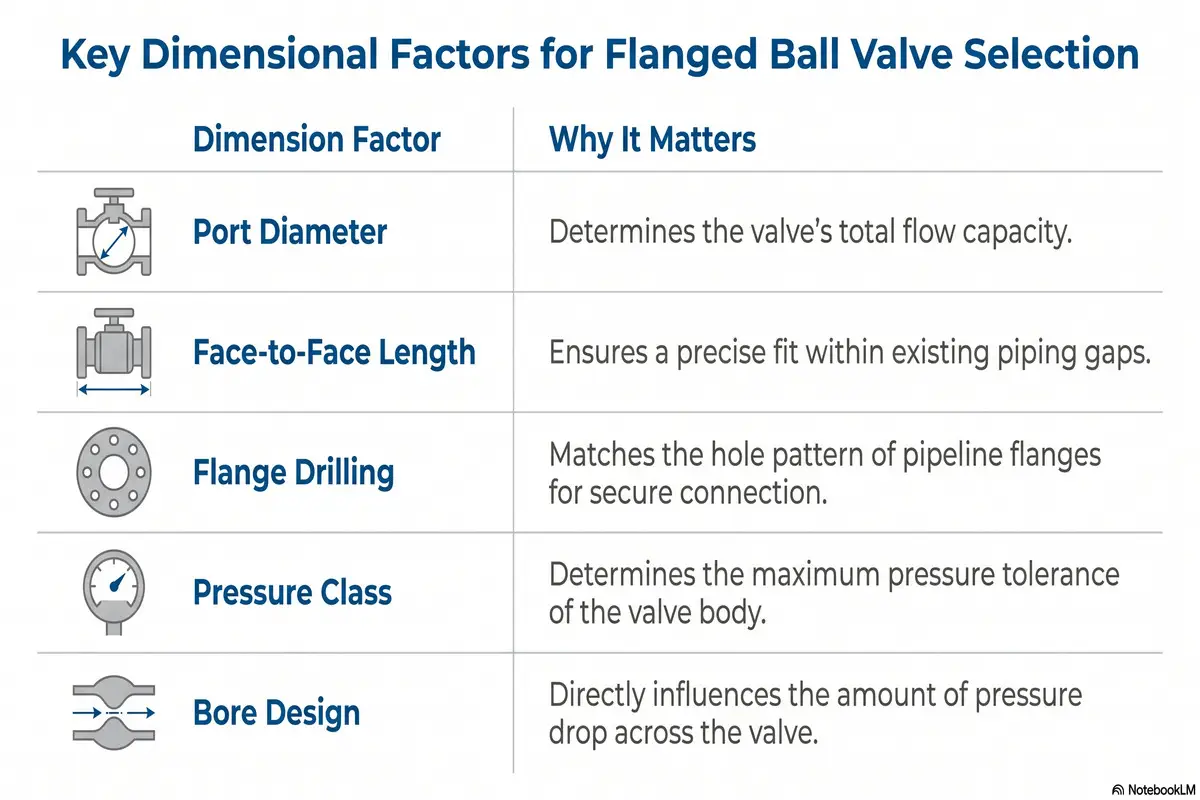
Key dimensional factors to review
Important sizing factors include:
| Dimension Factor | Why It Matters |
| Port diameter | Affects flow capacity |
| Face-to-face length | Ensures installation fit |
| Flange drilling | Matches pipeline flanges |
| Pressure class | Determines pressure tolerance |
| Bore design | Influences pressure drop |
These dimensions work together to ensure the valve performs correctly in the intended application.
How is the correct valve size determined?
Valve size selection starts with flow requirements. The expected flow rate determines the valve bore needed to maintain stable system performance.
If the valve bore is too small, flow restriction increases pressure loss. If the valve is too large, flow control accuracy may decrease.
This is why valve sizing must consider pipe size, pressure, temperature, and media type. For example, a 2-inch flanged ball valve may suit moderate flow systems, while a 4-inch flanged ball valve is used for larger capacity pipelines.
Flow rate and line size relationship
Flow demand often guides nominal valve size selection:
| Pipe Size | Typical Application |
| 2-inch | Water lines, utility systems |
| 3-inch | Medium industrial flow |
| 4-inch | High-capacity process lines |
The proper match between pipe diameter and valve size helps maintain efficiency while minimizing turbulence.
What should be considered beyond nominal size in 2 flanged ball valve dimensions?
Nominal size is only one part of valve selection. Pressure rating, valve body design, and flange standards also affect performance.
For example, a 3pc flanged forged ball valve may offer higher strength in high-pressure service compared to a standard cast valve. This makes body construction an important part of the sizing process.
Valve end dimensions must also match the piping standard. If flange drilling patterns do not align, installation becomes difficult, and sealing problems may occur.
Important selection checks
Beyond size, selection should verify:
- Pressure class compatibility
- Flange standard compatibility
- Valve body construction
- Media suitability
- Operating temperature range
These checks help ensure the selected flange valve matches system demands.
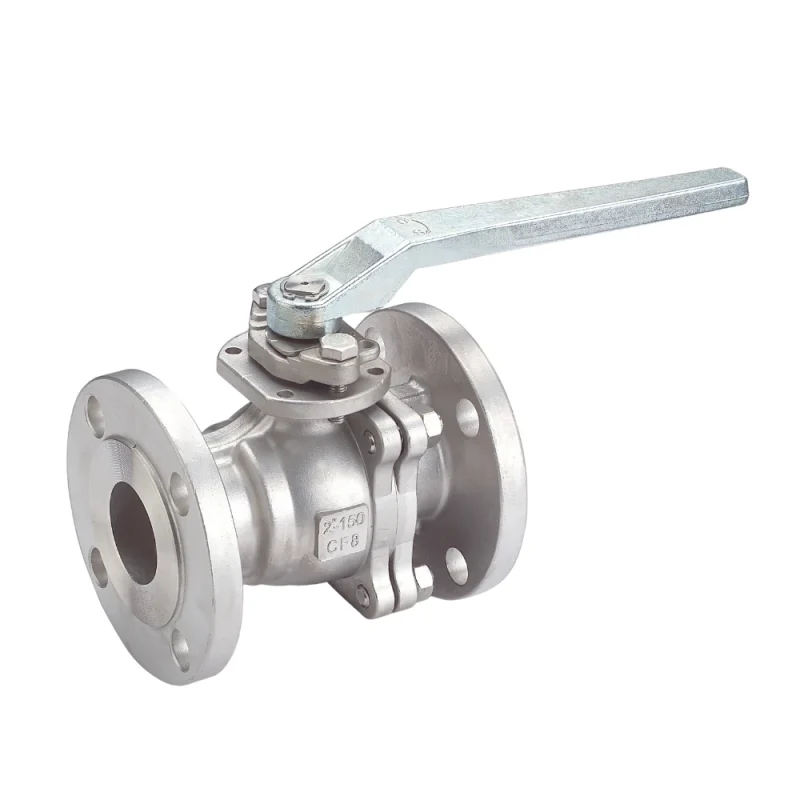
2PC Flanged Ball Valve
Designed for chemical and industrial systems, this 2PC flanged ball valve provides reliable shut-off for corrosive media such as acids, with stable sealing performance.
- Size: DN15 – DN200
- Pressure: PN16 – PN64 / Class 150 – 600
- Body Material: Stainless Steel & Carbon Steel
- Seat: PTFE / RPTFE / PEEK
- Connection: RF, RTJ Flanged
- Temperature: -29°C to 121°C
How do different flanged valve designs affect sizing?
Not all flanged ball valves use the same internal design. Different valve types can affect flow path, installation space, and operational flexibility.
A 3 flanged ball valve may have different body dimensions than a standard two-port valve. Additional ports change the valve layout and installation requirements.
Likewise, a 3-way L-type flanged ball valve has internal passages that redirect flow. This design supports switching between flow paths but requires more careful dimensional review.
Comparing common valve designs
| Valve Type | Main Sizing Consideration |
| 2-way flanged | Straight flow path |
| 3-way L-type | Multi-directional flow |
| 3-piece forged | Higher-pressure service |
Understanding these design differences improves selection accuracy.
Why does pressure class influence valve dimensions?
Pressure rating affects wall thickness, flange size, and body strength. Higher-pressure valves often have larger external dimensions even when the nominal bore remains the same.
This means two valves with the same nominal diameter may not share the same external measurements. A higher-pressure valve may require more installation space.
That is why flanged ball valve dimensions must always be reviewed together with pressure class specifications.
Higher pressure ratings generally mean:
- Thicker valve walls
- Larger flange dimensions
- Increased valve weight
- Greater structural strength
These factors are important when space and system pressure are both concerns.
How does YKY Valve support correct valve selection?
Correct sizing depends on accurate technical data and engineering support. YKY Valve provides dimensional specifications that help buyers match valves to system requirements.
Its product range includes 2 flanged ball valve models, multi-port options, and forged body designs for different pressure classes. This gives engineers more flexibility in system design.
YKY Valve also supports valve selection through technical drawings and dimensional verification, helping buyers choose valves that fit operational needs while maintaining long-term performance.
Standard-wise, the company boasts an ISO9001 certification with API-guaranteed valve products. Contact us today for more technical information.
Conclusion
When the valve size does not match the required flow rate or pressure conditions, it can reduce efficiency, increase wear, and shorten the service life of the valve.
However, selecting the right flanged ball valve size involves more than matching pipe diameter.
You must also consider flow demand, pressure class, flange connection standards, and the valve’s internal bore design to ensure stable and efficient operation.
By reviewing operating requirements and manufacturer specifications carefully, you can improve system health and achieve better long-term performance from the valve.