









Quick Answer
Butt weld and flanged gate valves each suit different pipeline needs. Butt weld valves offer permanent, leak-proof, high-pressure resistance with a compact design, ideal for harsh industries. Flanged valves provide easier installation and maintenance flexibility, suited for lower-pressure systems. Choose butt weld for permanent, demanding applications, and flanged for systems requiring frequent access.
Selecting the accurate end connection for pipeline connection is essential for system safety. The two most common choices are butt weld gate valve and flanged gate valve. Each type offers specific benefits depending on the temperature and pressure requirements.
This guide examines the technical differences between BW vs flanged valve options to help you choose the right hardware. By understanding these mechanics will ensure long-term operational efficiency in industrial piping.
Valve Design
Butt Weld Valves
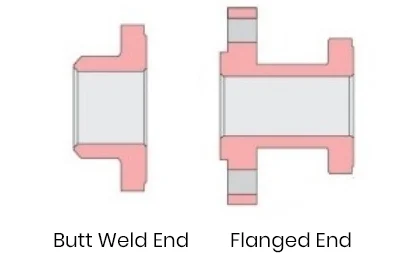
Butt weld gate valves are made to be welded directly to the pipes. Their ends are designed in a way that allows for a seamless connection with the pipe ends by heating and fusing them together. This results in a continuous joint and provides a smooth flow path for any fluid or gas in the system.
One of the notable features of butt weld valves is their compact design, as there are no flanges or additional connection hardware. This makes them ideal for limited space settings, such as offshore platforms and industrial plants with crowded piping layout.
Flanged Valves
In contrast, flanged valves have flanges at both ends that are flat and circular with holes around the perimeter. These are connected to the pipes by aligning the flanges and bolting them together with gaskets in between to guarantee a leak-tight seal.
The flanged design provides some benefits in terms of flexibility, allowing easy installation and removal for maintenance or replacement purposes. For maintenance, the bolts can be loosened to remove the valve without disrupting the entire piping system. Flanged valves also allow easier adaptation to different pipe sizes and materials using suitable gaskets and bolts.
Installation Process
Butt Weld Valves
Installing these valves needs specialized welding skills and equipment from experienced and certified welders. The process involves several steps, like cleaning the pipe and valve ends, beveling the edges, and using an appropriate technique and filler material.
The installation of butt weld valves can be longer compared to flanged valves, particularly for large-diameter pipes. However, once it is welded in place, it creates a permanent and strong connection resistant to vibration and high-pressure environments.
Flanged Valves
Installing a flanged gate valve is mainly straightforward. It is simply aligned with the pipe flanges, gaskets are placed between flanges, and bolts are evenly tightened. This can be quickly completed, even for less-experienced workers. But, it is essential to ensure that the bolts are tightened to the correct torque to avoid leakages.
Pressure and Temperature Resistance
Butt Weld Valves
Butt weld gate valves commonly offer better pressure and temperature resistance compared to flanged valves. The welded joint forms a strong, leak-resistant connection that handles high pressure and temperature, making it ideal for power plants, refineries, and chemical processing.
Flanged Valves
Flanged valves can also handle high pressures and temperatures, but the gasket between the flanges could be a weak point. In the long run, this may degrade due to temperature fluctuations, vibration, and chemical exposure that can lead to potential leaks.
Flow Characteristics
Butt Weld Valves
These valves have a smoother internal surface thanks to the absence of flanges and gaskets. This then results in less turbulence and pressure drops in the system, improving the overall efficiency of the piping system.
Flanged Valves
Flanged valves, on the other hand, may cause some minor flow disturbance at the flange connections. This happens particularly if the gaskets are not installed properly or irregularities in the flange surfaces.
Applications
Butt Weld Valves
These are mainly used in applications where permanent and leak-tight connections are needed, such as oil and gas, petrochemical, power generation, and high-purity industries. Their ability to survive in high-pressure and harsh conditions make them an ideal choice.
For instance, in the oil and gas industry, butt weld valves are used in pipelines for transporting natural gas, crude oils, and refined products. Meanwhile, in high-purity industries like pharmaceuticals and food processing, the smooth interior of these valves prevents contaminant buildup and protects product quality.
Flanged Valves
These are widely used in applications where frequent maintenance or replacement is needed. They can withstand low- to medium-pressure applications like water treatment plants, HVAC systems, and commercial buildings.
Flanged valves are used particularly in commercial establishments for plumbing and heating systems. Their easy installation and removal simplify routine inspection and maintenance.
The GB Gate Valve is engineered for reliable performance in industrial applications, including chemical, petrochemical, and power industries.
Explore Product
Initial and Long-Term Cost
Butt Weld Valves
The initial cost of butt weld gate valves is generally lower than flanged valves, particularly for small- to medium-sized valves. This is because they do not need the additional cost of gaskets, bolts, and flanges.
However, when considering the total installation costs, welding equipment and labor for butt weld valves can be higher and may offset the initial valve savings.
In the long term, these valves are more affordable thanks to their lower maintenance needs. As they have a permanent connection, they are less prone to leaks and need for frequent gasket replacement.
Flanged Valves
Flanged gate valves’ initial cost is much higher due to their additional gaskets, bolts, and flanges. They may also require more maintenance over time, especially if the gaskets need to be changed regularly—increasing the long-term cost.
Conclusion
Choosing between a butt weld gate valve vs flanged gate valve depends on the specific needs of the pipeline gate valve connection. Butt weld valves offer a permanent, leak-proof seal for high-pressure or hazardous settings, while flanged designs provide flexibility for maintenance and easier installation.
YKY manufactures a diverse range of gate valves for petrochemical plants, water treatment stations, and power systems. Certified to ISO 9001 and API standards, we support over 100 global OEMs with in-house R&D and automated production, delivering consistent quality, fast turnaround, and trusted performance worldwide.
At YKY, we support engineers in building secure and efficient pipeline systems globally.