










Gate valves are one of the most widely used components in industrial piping systems. They are known for providing tight shut-off, low-pressure drop, and reliable flow control. But what exactly makes them indispensable in oil & gas, water treatment, and power generation facilities?
This guide explores the gate valve, how it works, its types, design standards, and industrial applications, helping you understand why it remains a fundamental part of fluid control engineering.
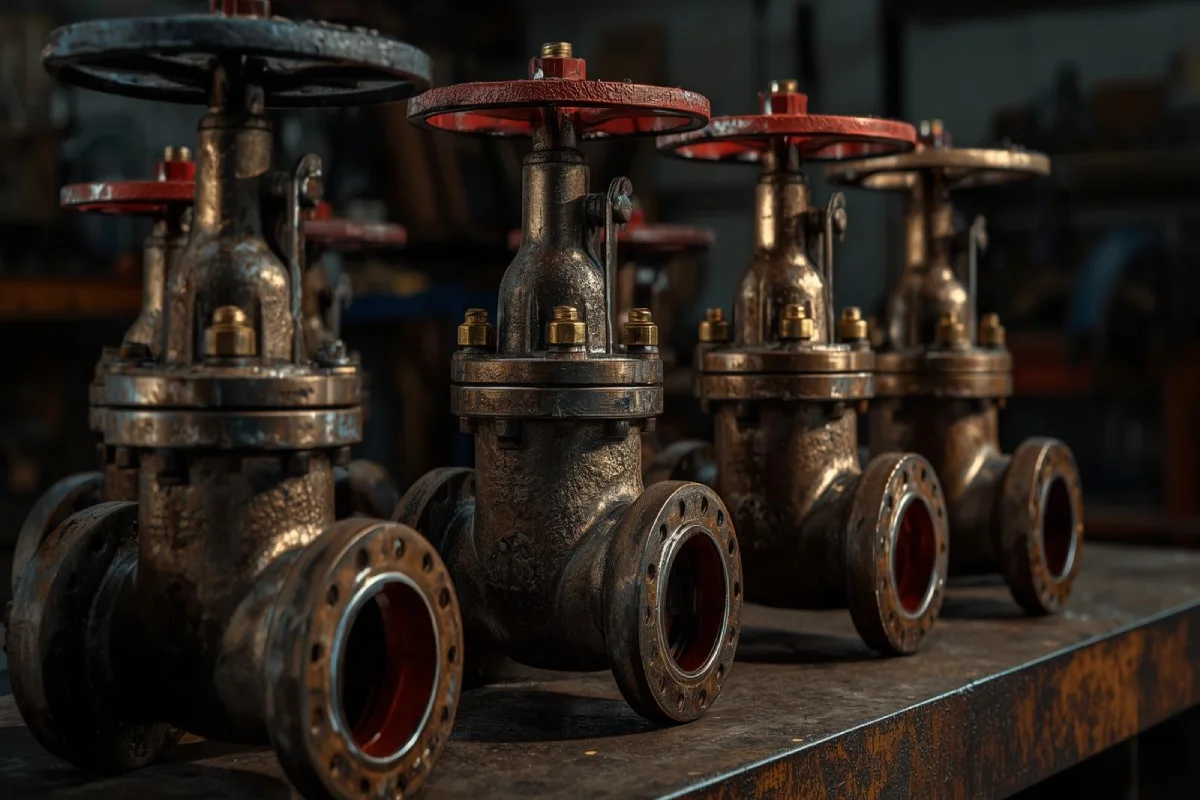
What Is the Gate Valve?
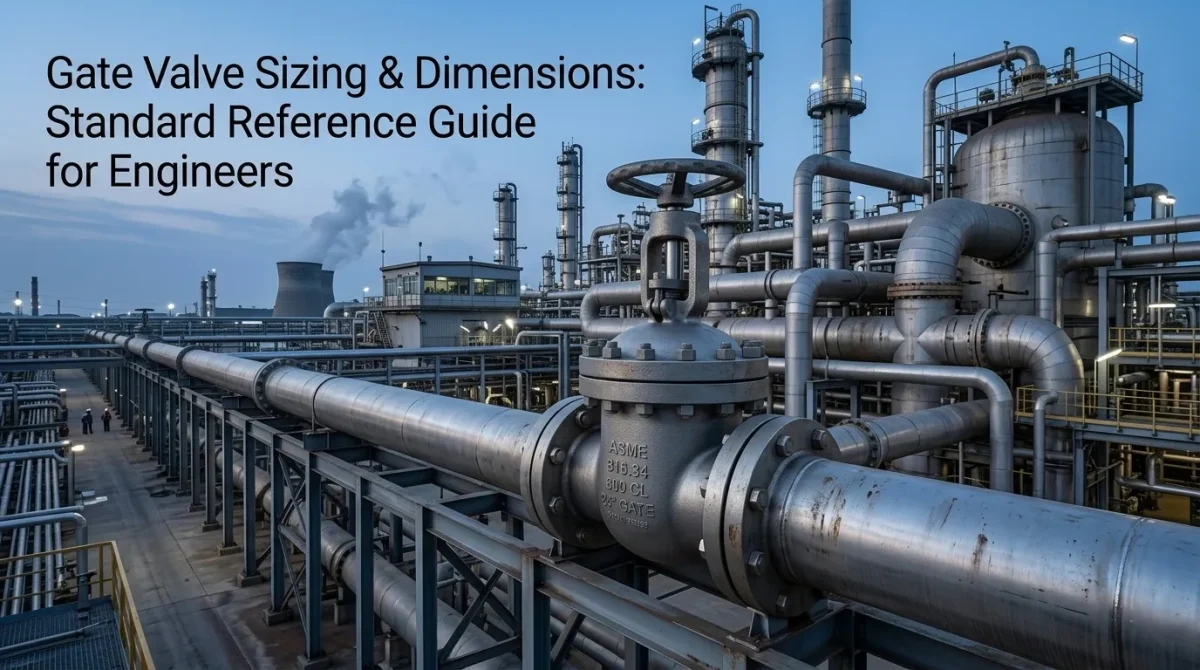
A gate valve is a type of linear motion valve used to start or stop the flow of fluid through a pipeline. The valve operates by lifting a gate, typically a wedge-shaped disc, out of the flow path. When fully open, the fluid passes straight through the valve with minimal resistance.
Gate valves are primarily designed for on/off service, not throttling. They are used in systems where tight sealing and unrestricted flow are critical.
What Is the Purpose of a Gate Valve?
The main purpose of a gate valve is to isolate sections of a pipeline for maintenance, inspection, or shutdown. They provide a tight seal against fluid flow, even under high-pressure and high-temperature conditions.
Typical uses include:
- Water supply networks
- Oil and gas pipelines
- Chemical processing plants
- Power generation systems
How Does a Gate Valve Work?
Gate valves operate through linear motion, meaning the gate moves straight up or down to control the flow of fluid. When the operator turns the handwheel or actuator, the stem lifts or lowers the gate within the valve body. In the fully open position, the gate retracts completely into the bonnet, allowing the medium, whether liquid, gas, or steam, to pass through with minimal flow resistance. When the valve is closed, the gate is pressed firmly between the seats, creating a tight, leak-proof seal that prevents any backflow or leakage, even under high-pressure and temperature conditions.
Key Components of a Gate Valve
- Body: Main structure that houses the internal parts.
- Bonnet: Protects the stem and packing.
- Gate/Disc: Blocks or allows flow.
- Stem: Connects the handwheel to the gate.
- Seat Rings: Provide sealing surfaces for the gate.
- Handwheel or Actuator: Used for manual or automated operation.
Advantages of Gate Valves
- Excellent shut-off capability
- Minimal pressure loss when open
- Suitable for bi-directional flow
- Durable under high pressure and temperature
Gate Valve Types
Gate valves come in various designs and configurations, each tailored to specific operating conditions and system requirements. The differences often lie in the disc shape, stem movement, and end connection type, which influence how the valve performs in different environments. Whether used in high-pressure steam lines, oil pipelines, or water treatment systems, each gate valve design provides unique advantages in terms of sealing performance, maintenance convenience, and flow control efficiency.
By Disc Design
- Solid Wedge Gate Valve: Most common type. Ideal for high-pressure, high-temperature service.
- Flexible Wedge Gate Valve: Provides better alignment under temperature fluctuations.
- Split Wedge Gate Valve: Used where a tight shut-off is essential, such as in steam systems.
- Parallel Slide Gate Valve: Features two discs with a spring mechanism for better sealing.
By Stem Type
- Rising Stem Gate Valve: The stem moves up and down, indicating valve position. Common in visible installations.
- Non-Rising Stem Gate Valve: The stem does not move vertically; ideal for underground or limited-space applications.
By Connection Type
- Flanged End Gate Valve: Ensures strong sealing, suitable for large pipelines.
- Butt Weld Gate Valve: Used for high-pressure pipelines.
- Threaded End Gate Valve: Ideal for smaller pipe sizes.
Gate Valve Design Standard
Gate valves are manufactured following international standards to ensure reliability, interchangeability, and safety across industries.
Some key gate valve design standards include:
- API 600: Steel gate valves for petroleum and natural gas industries. (Learn more about What Is An API 600 Gate Valve?)
- API 602: Compact forged gate valves.
- ASME B16.34: Valves for general industrial use.
- DIN EN 1984: European standard for steel industrial valves.
- BS 1414: Specifications for steel wedge gate valves.
Manufacturers like YDK Valve design products that comply with these standards to guarantee superior sealing, corrosion resistance, and long service life. We offer robust options, including our widely-used API Gate Valve series.
Gate Valve Dimensions Standard
Gate valve dimensions are standardized according to ASME B16.10 and EN 558, which define critical parameters such as face-to-face lengths, flanged end connections, and body dimensions. These dimensional standards are essential for ensuring interchangeability and compatibility across different piping systems and manufacturers. By following these guidelines, users can easily replace, upgrade, or integrate valves into existing pipelines without major modifications.
In industrial practice, nominal sizes typically range from DN15 to DN1200 (½” to 48″), with pressure ratings from Class 150 to Class 2500 or PN16 to PN420, depending on the material, design, and operating conditions. This flexibility allows gate valves to perform reliably across low- to high-pressure systems and in both general service and demanding industrial applications, particularly those utilizing the GB Gate Valve standard.
What Is a Gate Valve Used For?
Gate valves are primarily used in applications that require unrestricted flow or complete shut-off. When fully open, the valve allows the medium to pass straight through with minimal pressure drop, making it ideal for isolation purposes. However, gate valves are not designed for throttling or regulating flow, as operating them in a partially open position can lead to erosion, vibration, and premature wear on the gate and seat surfaces. For precise flow control, other valve types such as globe or butterfly valves are generally more suitable.
Common Industrial Applications
- Oil & Gas: Isolating sections in transmission pipelines.
- Water & Wastewater Treatment: Regulating main lines.
- Power Generation: Managing steam or cooling systems.
- Chemical Plants: Controlling corrosive or viscous fluids.
What Is the Difference Between a Ball Valve and a Gate Valve?
| Feature | Gate Valve | Ball Valve |
| Flow Control | Linear (gate moves up/down) | Rotary (ball rotates 90°) |
| Flow Restriction | Minimal when open | Minimal when open |
| Throttling | Not suitable | Better suited for throttling |
| Maintenance | Simple design | Compact, easier to automate |
| Applications | High-pressure isolation | Fast shut-off systems |
Both valves serve distinct purposes: gate valves for isolation, and ball valves for quick shut-off and automation.
What Is the Difference Between a Gate Valve and a Butterfly Valve?
| Feature | Gate Valve | Butterfly Valve |
| Mechanism | Sliding gate | Rotating disc |
| Space Requirement | Larger | Compact |
| Pressure Drop | Low | Slightly higher |
| Application | Isolation | Flow regulation |
| Cost | Higher | Lower |
Butterfly valves are space-saving and lightweight, while Guide To Stainless Steel Gate Valve options are ideal when tight sealing and minimal flow restriction are required. For example, understanding the differences helps in systems requiring durable materials.
Conclusion
Understanding what the gate valve is, its types, and standards is crucial in selecting the right valve for your industrial system. From API-certified steel valves to compact forged designs, gate valves remain a trusted solution for reliable flow isolation and system efficiency.
For industries that demand durability, precision, and compliance with international standards, YDK Valve offers high-quality gate valves engineered to perform under the most demanding conditions. Ensure you read up on Comprehensive Valve Testing and Quality Assurance to maximize system performance.
Key Takeaways
- Gate valves are designed for on/off isolation, not throttling.
- They are built to international standards like API 600, ASME B16.34, and DIN EN 1984.
- Selecting the right gate valve type depends on the medium, pressure, and installation space.
FAQs
Q1: What is the purpose of a gate valve?
A1: The purpose of a gate valve is to isolate or control flow in pipelines by fully opening or closing the passage.
Q2: How does a gate valve work?
A2: A gate valve works by moving a wedge or disc up and down across the flow path to either allow or stop the fluid flow completely.
Q3: What is the difference between a ball valve and a gate valve?
A3: A ball valve uses a rotating ball to control flow, while a gate valve uses a linear gate movement. Ball valves are better for quick shut-off; gate valves for isolation.
Q4: What materials are gate valves made of?
A4: Common materials include carbon steel, stainless steel, ductile iron, and bronze, depending on the pressure and fluid type.
Q5: Can gate valves be automated?
A5: Yes. Gate valves can be equipped with electric, pneumatic, or hydraulic actuators for remote or automatic operation in industrial systems.