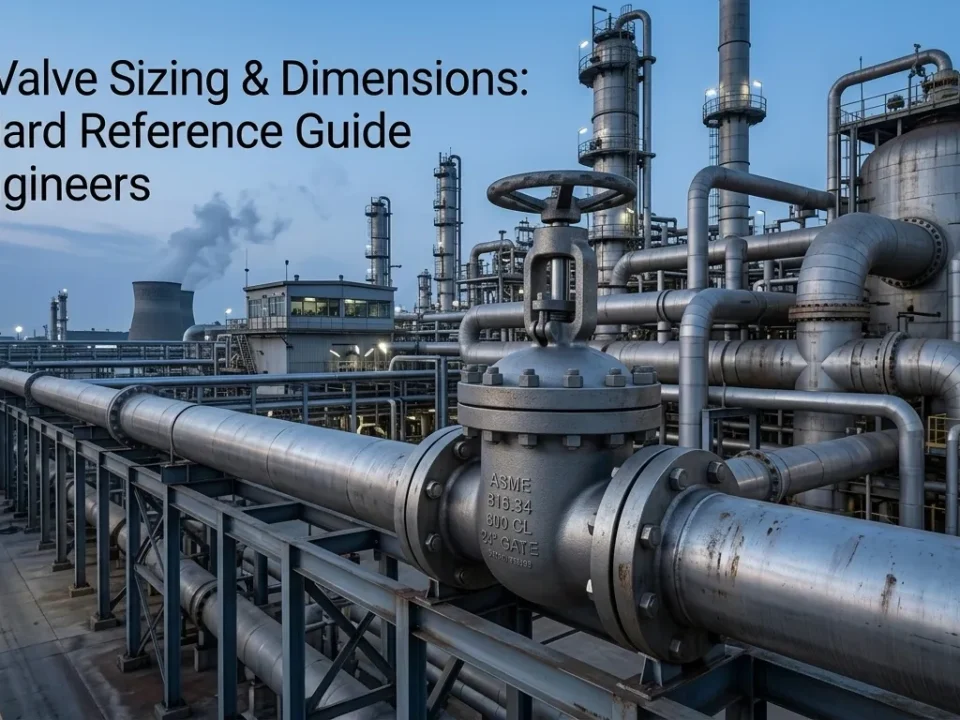










An API gate valve follows strict industry standards for design, materials, and testing, while non-API valves may vary in quality. The most notable difference between the two is how it directly affects safety, compliance, and long-term cost in industrial systems.
Understanding how these valves differ helps clarify why many projects require API-certified products, especially in the oil, gas, and energy sectors.
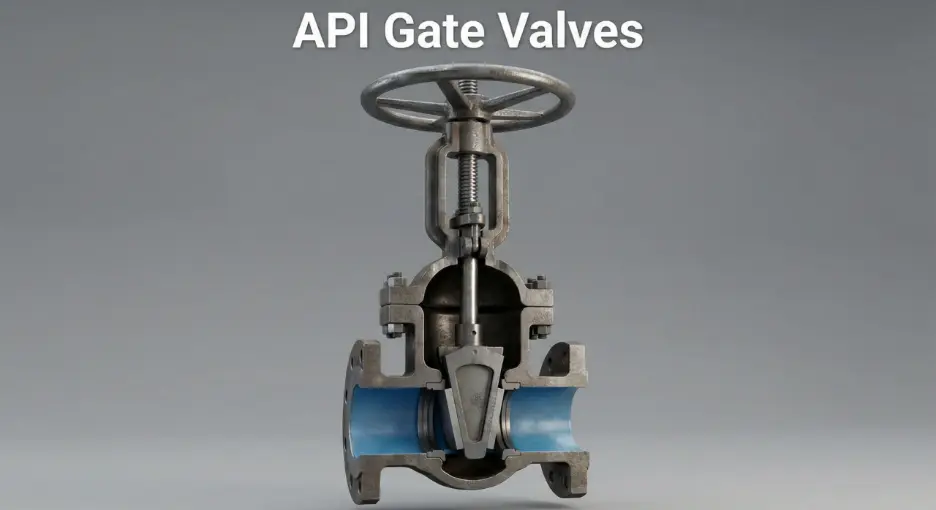
What is An API Gate Valve?
An API gate valve is manufactured according to the API standard for gate valves set by the American Petroleum Institute. These standards define how the valve should be designed, tested, and verified before use.
They cover key areas such as:
- Material selection for pressure and temperature resistance
- Manufacturing processes and tolerances
- Inspection and pressure testing procedures
This ensures consistent performance across different suppliers. API gate valves are widely used in critical applications where failure is not acceptable.
Bolted Bonnet Steel Gate Valves for the petroleum and natural gas industries, designed for reliable performance in harsh conditions.
Explore Product
Why API Certification Matters in Real Applications
API certification is not just a label. It represents a controlled and verified production process. Each valve must meet strict requirements before it can be approved.
Material control and traceability
API standards require full traceability of materials. Every component can be tracked back to its source. This reduces the risk of using low-quality or mixed materials. It also ensures consistency in strength and durability.
Testing and inspection requirements
Each valve undergoes multiple tests before delivery, which include pressure testing for leakage, structural testing for strength, and functional testing for operation.
Manufacturing consistency
API-certified production follows strict procedures. This reduces variation between batches. It also ensures that replacement valves match the original specifications.
How Non-API Valves Differ in Practice
Non-API valves do not follow the same level of control. Some may still perform well, but consistency is not guaranteed. Differences often appear in material quality and testing depth. This creates uncertainty in critical systems.
In less demanding applications, this may not be an issue. However, in high-pressure or hazardous environments, the risks increase.
Risks Associated With Non-API Valves
The use of non-API valves can lead to serious problems over time. These risks are often underestimated during initial selection.
Leakage and sealing failure
Without strict testing, sealing performance may vary. This can result in gradual leakage. In some cases, sudden failure may occur.
Structural weakness and bursting risk
Material inconsistency can weaken the valve body. Under pressure, this increases the risk of cracking or bursting. This is especially critical in oil and gas pipelines.
Project acceptance and compliance issues
Many international projects require API certification. Using non-API valves may lead to failed inspections, delays in project approval, and additional replacement costs.
Insurance and liability concerns
In case of failure, insurance claims may be affected. If non-certified components are used, claims may be denied. This creates financial risk for operators.
Lifecycle Cost Comparison: Short-Term Savings vs Long-Term Value
The initial price often influences valve selection. Non-API valves usually have a lower upfront cost.
However, total cost over time tells a different story. Here is a simple comparison:
| Cost factor | API valves | Non-API valves |
| Initial price | Higher | Lower |
| Maintenance frequency | Lower | Higher |
| Failure risk | Low | Higher |
| Replacement cost | Less frequent | More frequent |
| Compliance cost | Minimal | Potential penalties |
API Gate Valve vs Non-API Valve: Key Differences
The differences can be summarized across several aspects.
| Feature | API gate valve | Non-API valve |
| Standards compliance | Strict | Varies |
| Material traceability | Required | Limited |
| Testing level | Comprehensive | Basic or inconsistent |
| Dependability | High | Uncertain |
| Project acceptance | Widely accepted | May face restrictions |
This comparison highlights why API standards are often preferred in critical industries.
Actual Applications: Where These Valves Are Suitable
In large-scale projects, such as oil refineries, valve selection is closely controlled. API standards are often mandatory.
For example, in long-distance pipeline projects:
- High pressure and temperature require quality components
- Inspection teams verify compliance before installation
- Any deviation can delay the entire project
In such cases, API gate valves provide assurance.
Using non-API valves in such environments increases failure risk. Maintenance shutdowns can be costly. API-certified valves help reduce these risks.
With that in mind, valve selection should go beyond price comparison. Several factors must be considered together.
Key points include:
- Operating pressure and temperature
- Type of fluid handled
- Project compliance requirements
- Maintenance capability
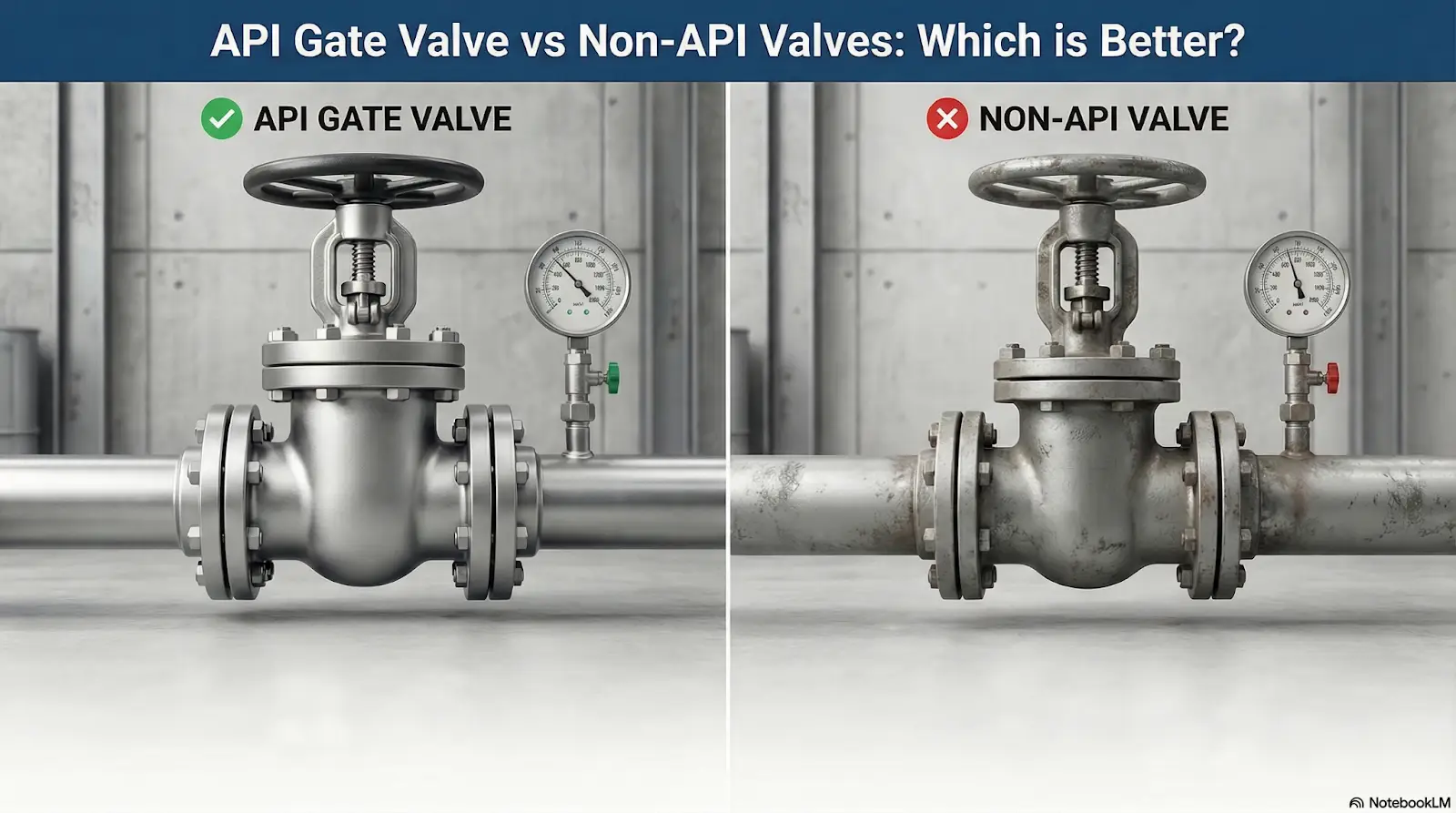
API vs Non-API Valves: Final Thoughts
The difference between these two valve types revolves around compliance reasons.
So, in a nutshell:
- API gate valves are great if you want consistently monitored quality.
- Non-API valves are perfect for initial cost reduction, but their lifespan is limited.
So, when safety, compliance, and lifecycle cost are what you’re looking for, then API-certified valves clearly are the perfect route.
For an API-certified valve manufacturing, contact us today to jumpstart your business.
Resources:
(PDF) A Review of Safety Valves: Standards, Design
600# GATE VALVE USING FEA AND STRESS ANALYSIS
A Review on Design and Analysis of Gate valve