







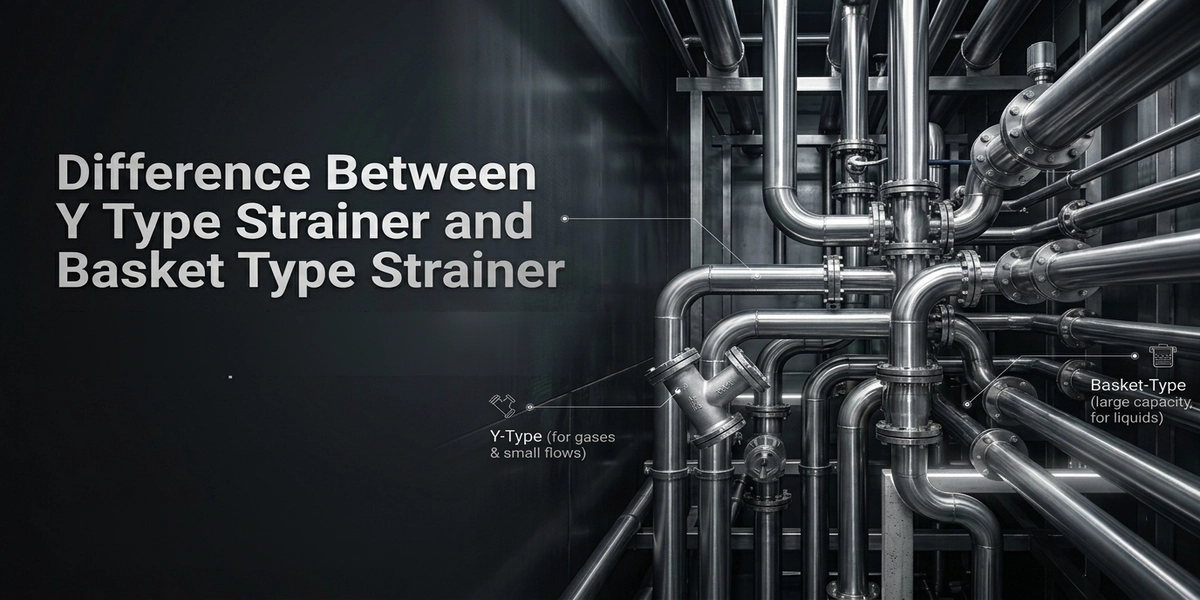
Selecting the wrong strainer does not just reduce efficiency — it destroys downstream equipment. A clogged valve seat, a scored pump impeller, or a failed compressor seal all trace back to inadequate filtration upstream. The decision between a Y-type strainer and a basket-type strainer determines how well a piping system protects its most critical components. This guide breaks down the mechanical differences, performance parameters, and application logic behind both designs.
What Is a Y Type Strainer in Industrial Piping?
A Y-type strainer is a high-pressure pipe strainer that removes solids from liquid, gas, or steam lines using a Y-shaped body where the straining leg angles off the main flow path. That geometry lets the unit handle high fluid velocities without structural compromise. Engineers install them in horizontal or vertical orientations, provided the straining leg points downward so gravity pulls debris into the collection pocket.
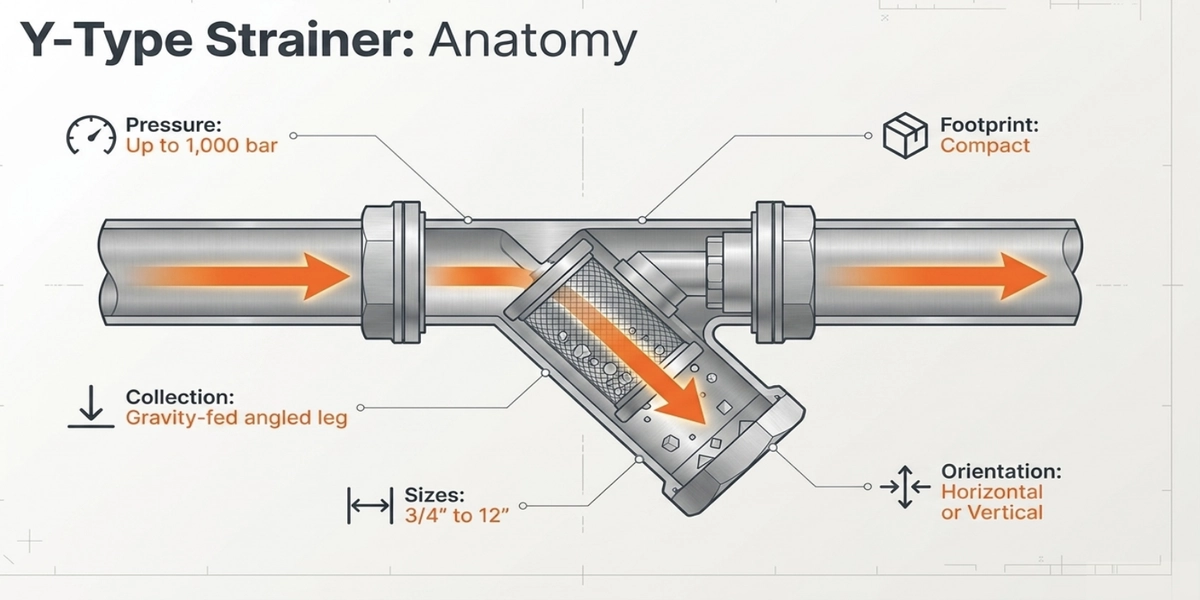
The purpose of strainer selection at this stage is protection. Turbines, compressors, and control valves cannot tolerate pipe scale, weld slag, or particulate matter. A Y-type strainer intercepts that debris before it reaches sensitive equipment. For smaller lines — such as a 3 4 y strainer on a steam branch — these units deliver high-pressure filtration in a compact footprint that fits constrained installations where larger hardware simply does not fit.
YKY manufactures these units to ISO9001, API, DIN, and GB standards. Pressure ratings reach up to 1,000 bar, which makes them the default specification for steam and high-pressure gas circuits across oil and gas, petrochemical, and power generation facilities.
What Is a Basket Type Strainer?
The basket type strainer houses a large-volume cylindrical screen element in a vertical chamber. The teapot strainer basket sits upright inside the body, giving it significantly more surface area than a Y-design of the same pipe size. More surface area means longer intervals between cleaning cycles — a direct operational advantage in liquid systems carrying heavy particulate loads.
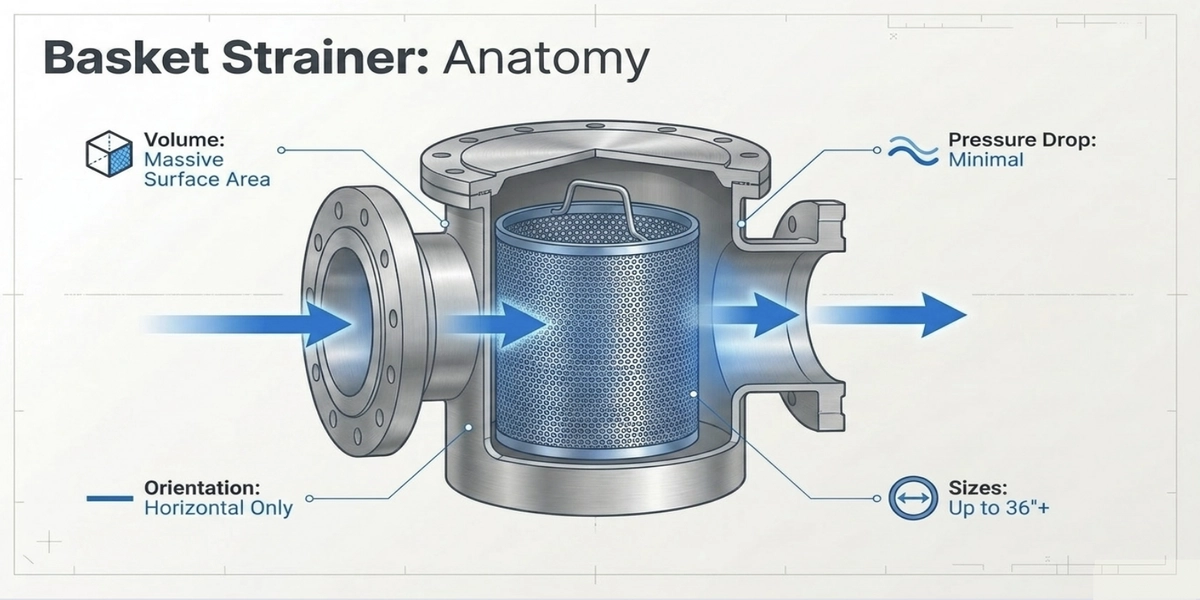
Basket strainers are limited to horizontal pipe runs because of their top-entry design. That constraint is a fair trade-off: the cover lifts off without draining the entire line in many configurations, which keeps maintenance downtime short. Water treatment plants, cooling towers, and chemical processing loops all run basket strainers for this reason. High debris volumes that would choke a Y-design within hours pass through a basket unit for days before a cleaning cycle becomes necessary.
Key Technical Differences: Y-Type vs Basket Strainer
Dirt Holding Capacity
Internal volume separates these two designs. The basket strainer holds substantially more contaminants before the pressure drop across the screen reaches a critical threshold. A Y-design works well for lines with low solid concentrations — gas circuits, steam headers, and clean liquid services. When the fluid carries heavy debris, the basket’s larger screen area is the correct call.
Pressure Drop and Flow Performance
Y strainers produce a higher pressure drop than basket units because the angled flow path creates more restriction. In steam and high-pressure gas applications, that restriction is an acceptable trade-off for the unit’s ability to handle pressures up to 1,000 bar. Basket strainers offer a straight-through flow profile that minimizes energy loss — the right choice for high-volume liquid systems where pressure efficiency directly impacts operating costs.
Installation and Maintenance
Y strainers support blow-off cleaning through a valve on the strainer cap, which flushes debris while the system remains pressurized. That capability eliminates downtime for low-to-moderate debris loads. Basket strainers require a full shutdown for manual screen removal and cleaning. The trade-off is access speed — the top-entry cover design makes the actual cleaning process faster once the line is isolated.
Technical Specification Comparison
| Feature | Y-Type Strainer | Basket Type Strainer |
| Flow Orientation | Delivery Lead Time | Horizontal Only |
| Pressure Rating | Up to 1,000 bar | Low to Medium |
| Dirt Capacity | Moderate | Very High |
| Cleaning Method | Blow-off or Manual | Manual Top-Entry |
| Pressure Drop | Higher | Lower |
| Main Application | Steam, Gas, High Pressure | Liquids, High Debris Volume |
| Standard Size Range | 3/4″ to 12″ | Up to 36″+ |
| Material Options | SS, Hastelloy, PTFE-lined | SS, Cast Steel, Alloy Steel |
| Delivery Lead Time | 30-Day Standard | 30-Day Standard |
Industrial Applications By Sector
Oil, Gas, and Chemical Processing
Y strainers protect compressors and turbines from pipe scale and construction debris in high-pressure gas circuits. For aggressive media — chlorine service, ammonia headers, or sour gas lines — YKY applies Hastelloy alloys and PTFE lining to prevent corrosion-driven failure. A corroded strainer body on an offshore platform does not just affect one line; it creates an unplanned shutdown that costs tens of thousands per day in lost production.
Pharmaceutical and Food Production
Basket strainers dominate hygienic applications because of their large screen area and accessible cleaning design. YKY manufactures these units in 316L stainless steel with electro-polished internals at a surface roughness of ≤0.8μm — the threshold that prevents microbial growth in dead zones. GMP compliance is not optional in pharmaceutical production, and every material and finish decision connects directly to regulatory approval.
How To Select The Right Strainer For Your System
The selection logic is straightforward once the operating conditions are defined:
Choose a Y-Type Strainer when: the system carries steam, high-pressure gas, or clean liquids; installation space is limited; or the line requires blow-off cleaning without shutdown.
Choose a Basket Strainer when: the fluid carries high debris concentrations; a low pressure drop is critical for system efficiency; or the pipe size exceeds 12 inches.
Material selection follows the media. Stainless steel covers corrosive and hygienic services. Cast steel and alloy steel handle high-temperature metallurgy applications in power and refining. Because of this, YKY conducts material qualification before production on all custom orders — the wrong alloy in a chlorine service line fails in months, not years.
YKY supports projects across 30+ countries with a 99% on-time delivery rate and full customization across body material, screen mesh size, connection type, and pressure class.
Bolted Bonnet Steel Gate Valves for the petroleum and natural gas industries, designed for reliable performance in harsh conditions.
Explore Product
Frequently Asked Questions
What is the difference between a Y-type and basket strainer for pump protection?
For pump protection, the basket strainer is the better specification in most cases. Its larger screen area handles high debris volumes in cooling water and process liquid circuits without rapid pressure drop buildup. Y strainers suit cleaner services — steam condensate lines and low-solids headers — where compact size and blow-off cleaning add value.
Can a Y-type strainer handle both liquid and gas service?
Yes. The Y-type strainer handles liquid, gas, and steam in the same body design. The straining leg must point downward regardless of pipe orientation so debris collects in the pocket. Material selection and mesh size are the primary variables that change between applications.
How often does an industrial strainer need cleaning?
Cleaning frequency depends on debris load, not a fixed schedule. A strainer on a clean steam header runs for months between cycles. On a newly commissioned line, cleaning is required within days as weld slag and pipe scale mobilize. Monitor the pressure differential — when delta P exceeds the design threshold, clean immediately.