









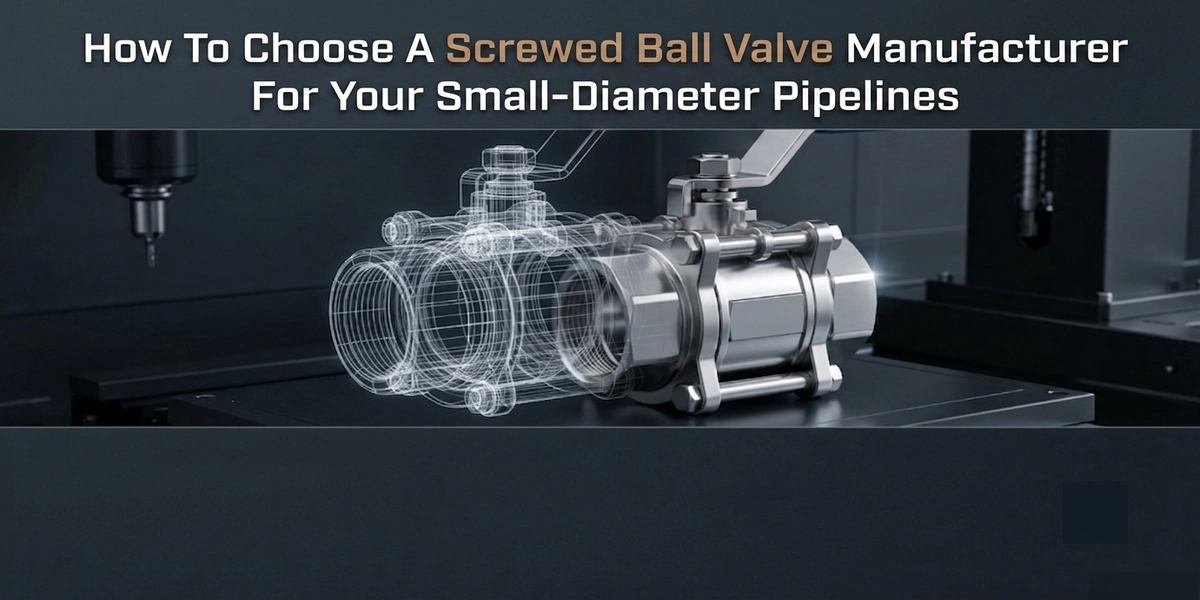
When you’re sourcing a screwed ball valve manufacturer for small-diameter pipelines and critical flow control, choosing the right partner helps protect seal integrity over time and cuts down on maintenance downtime in commercial and industrial environments.
Proper selection ensures long-term seal integrity and reduces maintenance downtime in commercial and industrial environments. Selecting the right manufacturer prevents the operational risks associated with poor thread compatibility and material failure.
Typical Applications For Screwed Ball Valves In Modern Piping
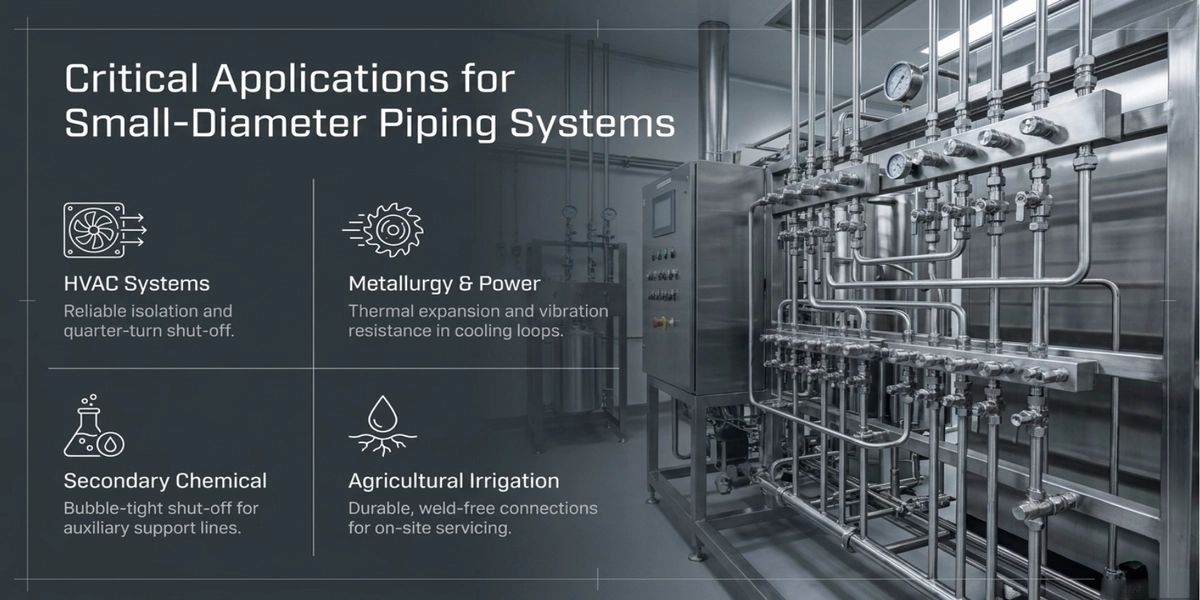
Threaded (screwed) ball valves are commonly used in pipelines under 2 inches, especially when the goal is quick installation and easy replacement—without relying on welding. Here are the most typical real-world applications:
1. HVAC Systems
Used for isolation and flow control in smaller piping runs, where reliable shut-off matters and maintenance access is important.
2. Agricultural Irrigation
Ideal for irrigation lines that need durable, straightforward connections, since threaded valves simplify on-site installation and future servicing.
3. Secondary Chemical Processing Lines
Often found in support or auxiliary chemical systems where engineers want bubble-tight shut-off and the flexibility to replace valves with minimal disruption.
4. Low- to Medium-Pressure Utility Services
These valves perform best when you need a quarter-turn, shut-off that’s tight and consistent, helping improve safety and reduce the chance of leakage.
5. Metallurgy & Power Generation Auxiliary Circuits
Used for steady flow control in lubrication and cooling loops, where the valve must maintain performance under vibration and changing operating conditions.
In all of these applications, performance depends on whether the manufacturer builds a valve body that can handle mechanical stress and thermal expansion without leaks forming at the pipe connection over time.
Technical Summary: Valve Types, Threads, And Standards
A professional manufacturer must offer a diverse range of body structures, including one-piece, two-piece, and three-piece designs. One-piece valves are economical for non-critical systems, while three-piece “swing-out” designs allow for in-line maintenance. Thread compatibility is critical; suppliers should support NPT, BSP, and BSPT standards to match global infrastructure requirements.
Material selection typically covers carbon steel for general industrial use and 316L stainless steel for corrosive or hygienic media. To ensure safety, factories must conduct pressure and sealing tests in accordance with ISO 9001 and API 6D standards before delivery. These tests verify that the valve can achieve zero-leak performance under its maximum rated pressure and temperature.
Key Points For Selecting A Screwed Ball Valve Manufacturer
Overseas procurement teams must evaluate more than just the unit price when sourcing threaded hardware. A manufacturer’s engineering depth and quality control systems determine the stability of your entire pipeline project. Consider the following factors to ensure you partner with a factory that understands industrial reality.
Structural Integrity And Material Traceability
The mechanical strength of a valve body is determined by the quality of the casting or forging process. You should prioritize manufacturers that provide full material traceability and chemical composition reports for every batch. This documentation ensures that a stainless steel valve actually contains the required chromium and nickel levels to resist corrosion.
Global Thread Standards And Compatibility
Incorrect thread engagement is the leading cause of leakage in small-diameter systems. A reliable screwed ball valve manufacturer must utilize high-precision CNC machining to ensure thread accuracy within microns. This precision allows for a gas-tight seal when used with standard industrial pipe sealants or tapes.
Quality Control and Testing Benchmarks
Choose a supplier that employs rigorous testing protocols beyond basic visual inspections. Every valve should undergo shell pressure tests and seat leakage tests to meet ISO 5208 air-tightness standards. For critical oil and gas applications, look for manufacturers that provide explosion-proof and high-pressure certifications.
Engineering and Technical Support
Effective procurement requires a partner that acts as an engineering consultant rather than a standard parts supplier. As an industrial screwed ball valve manufacturer, YKY provides precision-engineered one, two, and three-piece threaded ball valves. We support various thread standards, including NPT, BSP, and BSPT, using materials such as carbon steel and stainless steel.
Our team understands that every project has unique requirements, offering selection recommendations based on specific working conditions. We provide OEM/ODM services and English technical support for water systems, HVAC, and industrial pipelines. This positioning ensures YKY serves as a manufacturer that both understands the structure and provides selection based on your working conditions.
How Do You Choose The Best Threaded Ball Valve Manufacturer?
To choose the best screwed ball valve manufacturer, you must verify their certification to ISO 9001 and API standards. Look for a supplier that offers full technical drawings, CAD files, and pressure/temperature specifications for their products. Ensure the factory can customize materials and seals to match your flow media, especially for corrosive chemical or high-temperature metallurgy applications.
Technical Comparison of Screwed Ball Valve Structures
| Feature | 1-Piece Ball Valve | 2-Piece Ball Valve | 3-Piece Ball Valve |
| Port Type | Reduced Port | Full Port | Full Port |
| Maintenance | Non-repairable | Disconnect for repair | In-line repairable |
| Common Use | Low-pressure HVAC | Industrial Fluids | High-Cycle Process |
| Leak Paths | Minimum | Moderate | Highest (Joints) |
| Primary Advantage | Most Economical | Balance of cost/flow | Maintenance Ease |
For technical research on fluid dynamics and valve performance in industrial systems, refer to the American Society of Mechanical Engineers (ASME).
Screwed Ball Valve Selection Checklist For Engineers
Use this checklist during your next procurement cycle to screen potential manufacturers. This systematic approach reduces the risk of equipment failure and project delays.
- Standard Verification: Does the factory manufacture to ISO 9001, API, DIN, or JIS standards?
- Thread Precision: Does the manufacturer support NPT, BSP, and BSPT threads with CNC-machined accuracy?
- Material Options: Can they provide Hastelloy, PTFE lining, or 316L stainless steel for harsh media?
- Documentation: Are CAD drawings, pressure/temperature specs, and testing reports available for review?
- Supply Stability: Does the manufacturer have a 99% on-time delivery rate for global projects?
- Customization: Can they provide insulation jackets or special coatings for demanding environments?
Partner With YKY For Reliable Pipeline Solutions
Selecting the correct screwed ball valve manufacturer is the foundation of energy security and operational uptime. By choosing a partner with 20+ years of experience and certified hardware, you ensure the safety of your facility. YKY helps you cut costs and speed up projects with fully certified, customizable valves backed by expert support.
Visit YKY Valve Ball Valve Products to explore our technical specifications and structures. Contact our technical team today to receive a factory-direct quote tailored to your specific application. Let us help you achieve the zero-leak performance and stability your international projects demand.
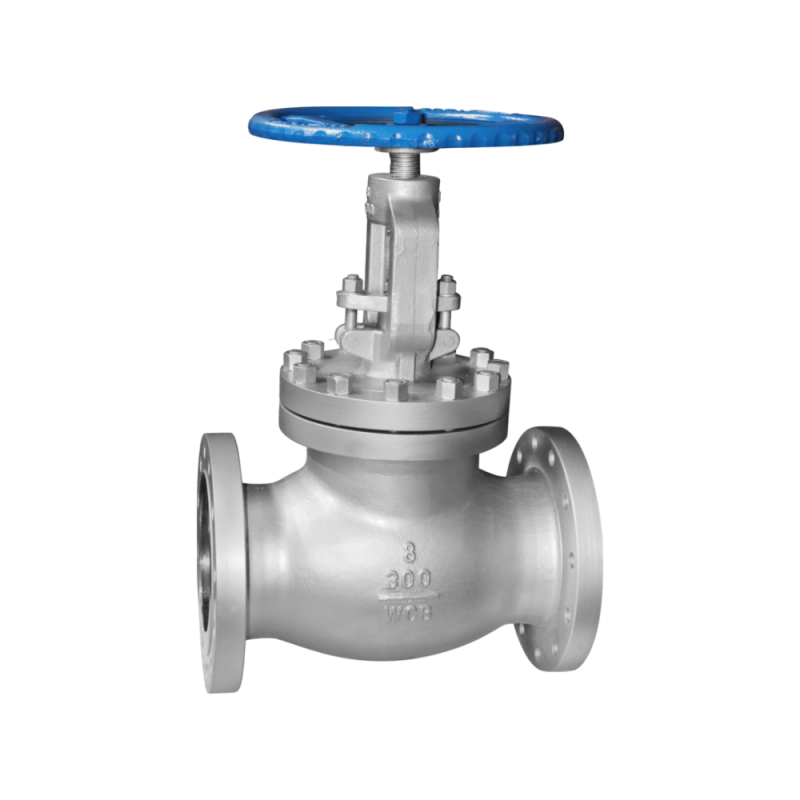
API Globe Valve
Engineered for high-performance flow control, this API globe valve delivers reliable sealing in high-pressure and high-temperature environments. Ideal for water, oil, and steam systems.
- Valve Size: 1/2″ – 24″
- Pressure Class: 150Lb – 600Lb
- Body Material: WCB, CF8, CF8M, WC6, WC9
- Temperature Range: -29°C to 425°C
- Sealing Options: STL, Hastelloy, Titanium Alloy
- Applicable Media: Water, Oil, Steam
FAQs
What is the maximum pressure rating for a three-piece screwed ball valve?
Three-piece screwed ball valves handle pressures up to 3,000 PSI and beyond, depending on body material and seat configuration. One-piece units top out at 1,000 PSI, making them unsuitable for high-pressure process lines. Always match the valve pressure class to the system’s maximum allowable working pressure — not the normal operating pressure.
What is the difference between NPT and BSPT thread standards on a ball valve?
NPT is a tapered thread standard common in North American piping systems; the taper itself creates the pressure seal. BSPT is a British tapered standard used across European and Asian markets. The two are not interchangeable — forcing an NPT valve into a BSPT fitting produces an incomplete seal that fails under pressure. Confirm the site’s thread standard before ordering.
Can a screwed ball valve handle both liquid and gas service?
Yes, provided the body material, seat type, and pressure rating match the media requirements. One-piece bodies are the preferred specification for gas service due to their minimal joint count and lowest external leakage risk. For liquid service with particulate content, a three-piece body with hardened seats handles abrasive wear far better than a standard PTFE seat configuration.