









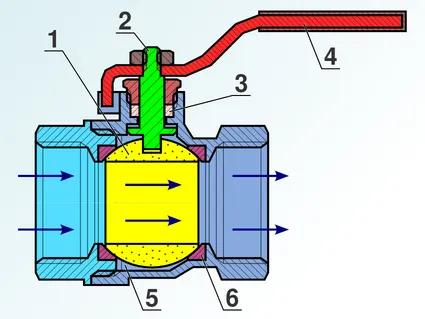
At its core, the ball valve mechanism features a precision-machined sphere with a drilled bore called the port. The ball is connected to a stem, which is operated manually by the handle or automatically by an electric actuator.
When the valve is open, the handle lies parallel to the pipeline, showing the bore is aligned with the flow direction. A 90-degree turn of the handle makes the hole perpendicular to the flow, completely blocking the passage of liquid and gases. In this position, the valve seats are pressing tightly against the ball to prevent leaks.
Compared to globe or gate valves, which require multiple turns to open or close, ball valves offer fast operation with just a quarter-turn of the handle. This straightforward mechanism behind how a ball valve works also reduces operating torque, minimizing wear on internal components.
The Major Components of a Ball Valve
| Component | Function | Common Materials |
| Ball (1) | Rotates 90 degrees to align with or block the flow path, controlling passage of liquids and gases | Stainless steel, chrome-plated steel |
| Stem (2) | Connects the ball to the handleTransfers the rotational force to the sphere when the handle is turned | Stainless steel |
| Stem Seals and Packing (3) | Allow the stem to freely turn while making sure the pressure is contained and maintained | PTFE, graphite |
| Handle (4) | Opens and closes the valve, either manually or automatically | Steel handle, or pneumatic, electric, or hydraulic actuators |
| Valve Body (5) | Houses all internal components, including the ball, seats, and stemWithstands the pressure and temperature of the systems and media | Alloy, brass, carbon steel, and duplex stainless steel |
| Seats (6) | Apply pressure against the spherical surface to prevent any leaking while the valve is closed | PTFE, RPTFE, metal |
What Ball Valve Seats Are Made Of
The materials used impact the pressure rating, temperature resistance, chemical compatibility, and overall durability of the seats.
PTFE (Polytetrafluoroethylene)
The most common material due to its low friction coefficient and high chemical resistance. PTFE may warp or melt under prolonged exposure to high pressures and temperatures. However, it remains suitable for food products, pharmaceuticals, water, chemicals, and general industrial applications that process clean fluids.
Reinforced PTFE
A combination of PTFE with fillers such as carbon, graphite, and glass fiber to boost wear resistance and mechanical strength. Compared to standard PTFE, RPTFE, like in the YKY 2PC flanged ball valve, offers greater compressive strength and dimensional stability, making it good for oil and gas processing, chemical plants, and other more demanding industrial applications.
Metals
Specifically designed for applications involving extreme pressures and temperatures as well as abrasive and erosive media. These are commonly manufactured with stainless steel and then coated with hard-facing materials, such as Stellite or tungsten carbide. They provide reliable performance in petrochemical processing, power generation, and steam system applications.
The Different Types of Ball Valve Ports
The port configuration of a ball valve refers to how the bore diameter is relative to the connected pipe diameter. Port size affects flow capacity, pressure drops, and suitability for different applications.
Full Port
This design has an internal bore diameter that is nearly or equal to the internal diameter of the pipeline. It allows the media to flow through the valve with minimal restriction, resulting in a higher flow coefficient (Cv). It is ideal for applications where maximum flow efficiency is required, or where pipeline cleaning devices called pigs need to pass through without obstruction. A major concern is that it has a larger ball and valve body, so it is heavier and more expensive.
Standard Port
This has an internal bore diameter that is smaller than that of the connected pipeline. The reduced opening slightly restricts the flow path, leading to lower flow capacity and moderate pressure drops. The standard port allows for a smaller ball and body, so they are lighter and cheaper to manufacture. Consequently, the reduced bore types are ideal for a wider range of applications where space, weight, and cost are important considerations.
Floating Ball Valve vs Trunnion Ball Valve
Depending on how the ball is supported in the valve body, ball valves can be classified as either floating or trunnion. The mounting impacts pressure-handling capacity, operating torque, and sealing performance.
Floating
The ball is supported only by the stem and seats, allowing movement towards the downstream seat to create a tight seal by pressing against it. The operating torque increases when the pressure rises and the valve size increases, however.
Trunnion
The ball is held securely in place with additional upper and lower supports. Rather than the ball moving on its own, the seats or trunnions are pressure-assisted or spring-loaded to create a seal. This design is more reliable for higher-pressure and larger-diameter applications.
When comparing floating versus trunnion ball valves, the better fit is determined by the pressure and size of the application.
Ball Valve Operation Explained
The stem and handle mechanism enables the operation of the ball by transmitting the rotational motion. Most ball valves feature a blowout-proof system, which is the safest option as it is inserted from inside the valve body and prevents ejection under pressure.
Manual Operation
This means operating the ball valve using the handle. When the handle is parallel to the pipeline, the valve is open. When it is perpendicular, the valve is closed. The quarter-turn design enables simple and quick operation.
Automated Operation
When ball valves are equipped with electric or pneumatic actuators instead of a manual handle, they can be operated remotely or automatically. This improves operational efficiency, flow precision, and easy integration with automated processes.
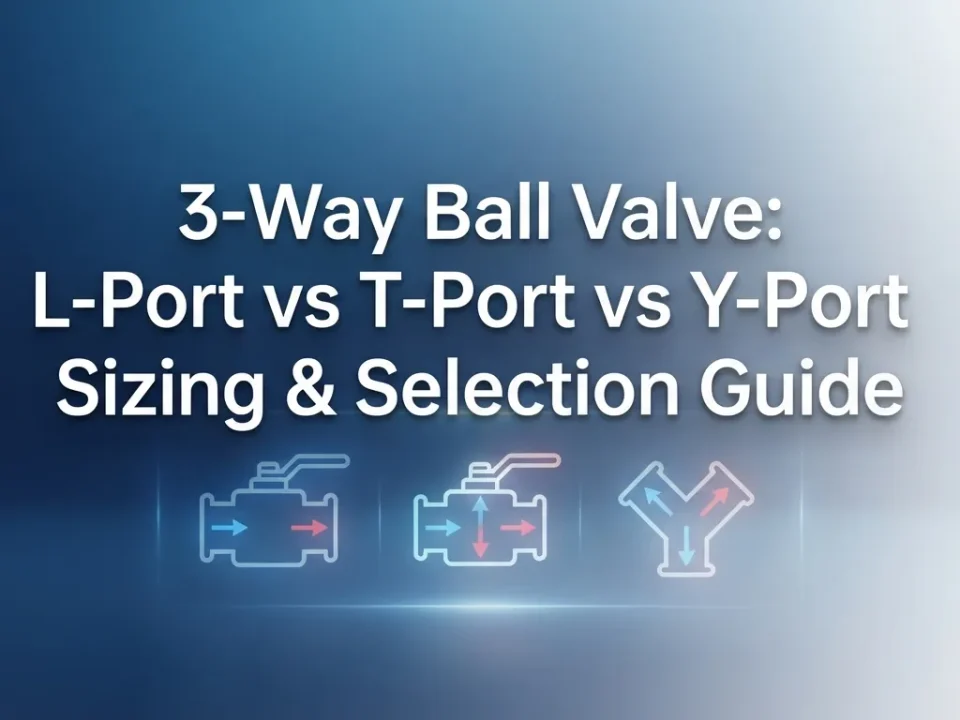
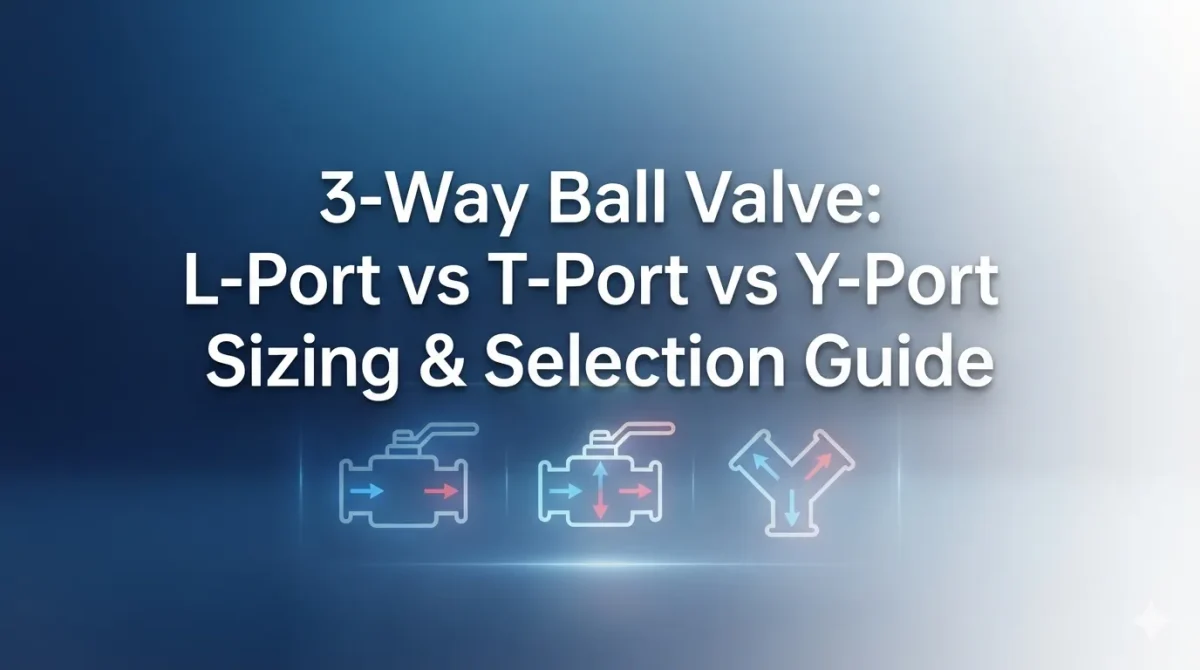
Ball valves come in different configurations, not just by the size of the port or the mounting of the ball. They can also be classified as two-way ball valve and three-way ball valve designs, determined by the direction and routing of the flow paths. Find detailed and insightful answers to further questions like “how does a 2-way ball valve work?” and “what is a 2-way ball valve?” on the YKY Valve blog or by chatting with a YKY Valve representative.
The 2PC Thread Ball Valve features a two-piece design for easy installation and reliable sealing. Widely used in water treatment, HVAC, and petrochemical applications
Explore Product
Frequently Asked Questions
Can a ball valve go bad?
They can, but choosing the right ball valve material and design from a reputable manufacturer like YKY Valve can reduce the amount of maintenance necessary. Regular inspections and appropriate lubrications also reduce wear and prevent damage.
Why are ball valves designed with full spheres?
Not all ball valves are designed with full spheres, but they are the most popular design due to balanced contact with the seats, smoother flow path, quarter-turn rotation, greater internal pressure handling, and consistent leak-tight sealing.
How does an electric actuator ball valve work?
Upon receiving a control signal, the electric motor drives the reduction gearbox to generate enough torque to rotate the stem and ball 90 degrees between open and closed positions. Internal limiters stop the motor at the end of travel, but some actuators also provide position feedback and manual override functions.