











Quick Answer
Choosing the right ball valve seat material depends on temperature, pressure, and media. PTFE suits general service up to 180°C, while RPTFE handles higher mechanical loads. PEEK extends to 250°C with better cold flow resistance. Metal seats are for extreme conditions, including high temperatures, abrasive media, and fire-safe applications, where polymers fail.
Choosing the right ball valve seat material comes down to three operating variables: temperature, pressure, and media.
PTFE is the standard starting point for general service up to 180°C, where chemical resistance and low friction are the priority. RPTFE handles heavier mechanical loading and high-cycle duty within the same temperature range.
PEEK steps up to 250°C with better cold flow resistance for demanding process environments.
Metal seats cover everything above that, including high temperature, abrasive media, and fire-safe applications where polymer seats fail too quickly to be practical. Match the seat material to the actual operating conditions, and the selection becomes straightforward.
What Is a PTFE Seat in a Ball Valve?
PTFE is the default seat material for most general service ball valves. Soft, chemically inert across most process fluids, with low friction against the ball surface. That low friction means lower operating torque and longer seal life under normal conditions.
Seat PTFE works across a wide temperature range, roughly minus 29°C to 180°C. It handles water, moderate-temperature steam, most acids, hydrocarbons, and a broad range of chemical services without degrading.
The limitation shows up under sustained load. Pure PTFE cold flows. In high-pressure applications or where the valve sits partially open for extended periods, the seat deforms around the ball. Once deformed, sealing integrity drops and torque increases. That is when PTFE starts failing before its chemical limits are reached.
Material RPTFE: When Standard PTFE Is Not Enough
Material RPTFE, reinforced PTFE, adds fillers like glass fiber, carbon, or graphite to the PTFE matrix. The filler improves compressive strength and dimensional stability without significantly affecting chemical resistance.
RPTFE seats handle higher pressures and heavier-duty cycling than virgin PTFE. The right choice for automated valves that cycle frequently, high-pressure applications, and service with significant mechanical load on the seat. Chemical compatibility remains similar to virgin PTFE. The upgrade is mechanical, not chemical.
PEEK Valve Seat: The Step Up From PTFE
PEEK, polyether ether ketone, outperforms PTFE on temperature resistance and mechanical strength. A PEEK valve seat handles up to around 250°C continuously, compared to 180°C for PTFE. Compressive strength is significantly higher. Cold flow under sustained load is much less of a concern.
A PEEK valve seat suits applications where PTFE is approaching its temperature or pressure limits. Hot oil service, downstream steam applications, and high-cycle automated valves in demanding process environments. The tradeoff is higher cost and slightly lower chemical resistance in some aggressive media compared to virgin PTFE.
Metal Seats: For the Harshest Conditions
Metal seats handle what polymer seats cannot. High temperature above 250°C, abrasive media that erode soft seats rapidly, fire-safe certification requirements, and extreme pressure differentials.
Stellite overlay, hardened stainless steel, and tungsten carbide are the most common options. Each suits different combinations of temperature, abrasion, and corrosion resistance. Operating torque is higher than that of soft seats because metal-to-metal contact does not provide the same low-friction interface. That higher torque needs to be factored into actuator sizing on automated applications.
Metal seats are standard in refinery applications, high-temperature steam service, and abrasive slurry handling, where soft seats would wear out quickly.
Ball Valve Seat Material Selection Guide: Comparison and Rules of Thumb
| Seat Material | Max Temp | Cold Flow Risk | Chemical Resistance | Best For |
| PTFE | 180°C | Moderate | Excellent | General service, chemical, water |
| RPTFE | 180°C | Low | Excellent | High-cycle, high-pressure general service |
| PEEK | 250°C | Very low | Good | Hot oil, steam, high-cycle demanding service |
| Metal | 600°C+ | None | Depends on the alloy | High temp, abrasive, fire-safe, refinery |
Three rules cover most of these selection decisions.
General service at moderate temperature and pressure: seat PTFE is the right starting point. Cost-effective and reliable in standard conditions.
PTFE approaching temperature limits or showing cold flow under pressure: move to PEEK valve seat. The temperature headroom and mechanical strength improvement solve most problems that push PTFE into failure.
High temperature, abrasive media, fire-safe requirements, or extreme pressure differential: metal seats. No soft seat alternative exists for those conditions.
YKY ball valves are available with PTFE, RPTFE, PEEK, and metal seat options. Buyers provide operating conditions, and YKY’s engineering team recommends the right one at no charge. Every valve is air-tightness tested to ISO 5208 with documented sealing performance before shipment. Proven in corrosive chemical service with PTFE-lined and Hastelloy body combinations across 30+ export markets.
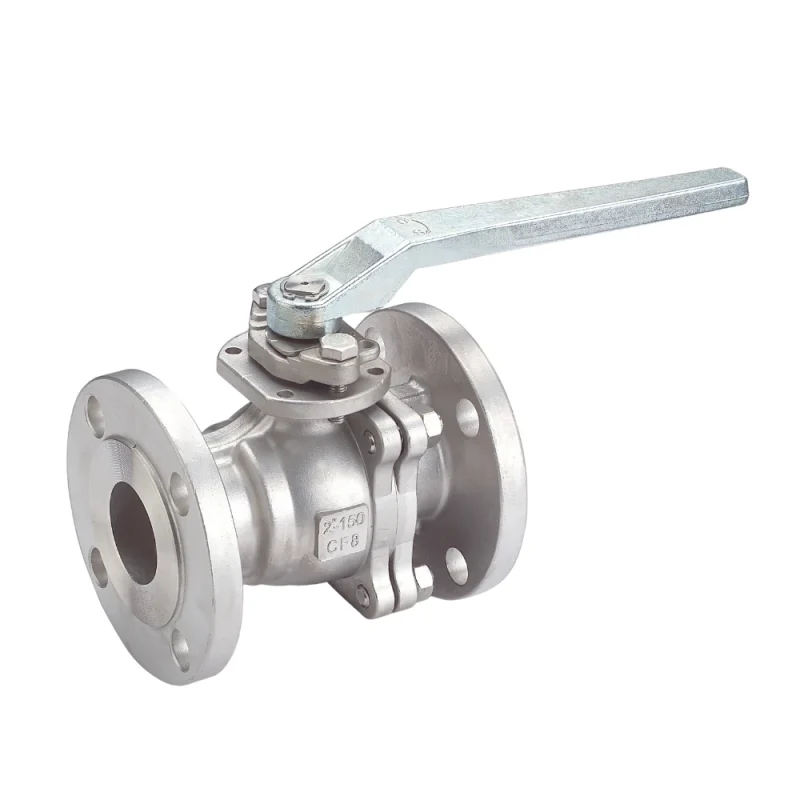
2PC Flanged Ball Valve
Designed for chemical and industrial systems, this 2PC flanged ball valve provides reliable shut-off for corrosive media such as acids, with stable sealing performance.
- Size: DN15 – DN200
- Pressure: PN16 – PN64 / Class 150 – 600
- Body Material: Stainless Steel & Carbon Steel
- Seat: PTFE / RPTFE / PEEK
- Connection: RF, RTJ Flanged
- Temperature: -29°C to 121°C
Buyer Checklist for Ball Valve Seat Material
Maximum operating temperature, including upset conditions, not just normal operating temperature.
Operating pressure and whether the valve will see sustained high differential pressure that causes cold flow in soft seats.
Process fluid compatibility confirmed against the actual process fluid, not a generic chart.
Cycle frequency. High-cycle automated valves need material RPTFE or PEEK over virgin PTFE for long-term sealing integrity.
Fire-safe requirement. If required, metal seats are the standard specification regardless of other conditions.
Supplier testing documentation. Confirm ISO 5208 air-tightness test reports are available for the specific seat configuration before accepting delivery.
Frequently Asked Questions
What is the difference between PEEK and PTFE seats?
PTFE is softer, lower cost, and chemically resistant, but cold flows under sustained load and is limited to around 180°C. PEEK handles up to 250°C, resists cold flow better, and suits higher pressure and higher cycle applications at a higher cost.
Which is better, a metal seat or a soft seat ball valve?
Depends on the application. Soft seats offer lower torque and lower cost for general service. Metal seats suit high temperature, abrasive, and fire-safe applications where soft seats would fail or degrade too quickly.
What is the PTFE seat in a ball valve?
A ring of polytetrafluoroethylene that contacts the ball surface on both sides when closed, creating a low-friction, chemically resistant seal. Standard in most general service ball valves up to around 180°C.
What is a PEEK valve seat?
Made from polyether ether ketone, a high-performance engineering polymer. Handles higher temperatures than PTFE, up to around 250°C, resists cold flow under sustained load, and suits demanding applications where PTFE is approaching its performance limits.