










Quick Answer
High-temperature valves operate above 300°C, where standard materials and seals fail. Selection depends on temperature range, thermal cycling, pressure derating, and media compatibility. Materials range from alloy steels to nickel-based alloys, while designs feature metal seats, graphite packing, and extended bonnets. Common types include ball, gate, and triple-offset butterfly valves. Proper selection ensures reliable performance in power, petrochemical, and chemical industries, reducing failures and downtime.
A high-temperature valve works in systems where operating heat exceeds normal valve limits. This guide explains how these valves function, how to select the right type, and where they are commonly used. By the end, readers will understand materials, designs, and applications that help reduce failures and downtime.
What Defines High-Temperature Service
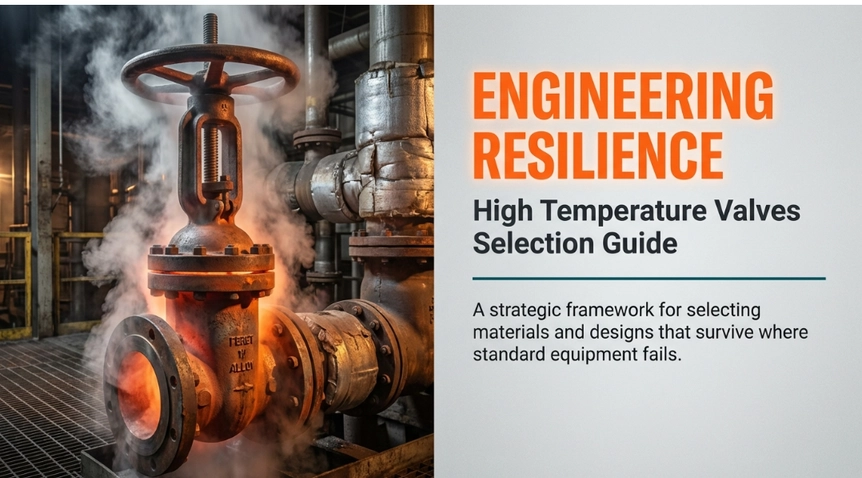
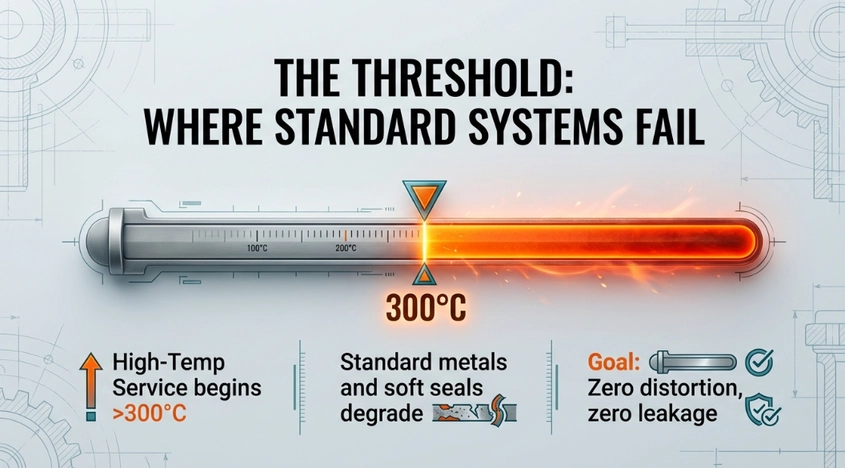
High-temperature service begins when operating heat damages standard metals or soft seals. In most systems, this occurs above 300°C. At these levels, metal expansion, oxidation, and seal breakdown accelerate. Valves must handle constant heat without distortion or loss of sealing force.
Three Key Takeaways
- Heat changes material strength and pressure limits.
- Sealing methods must shift from soft to metal or graphite.
- Design must allow controlled thermal expansion.
Temperature Ranges and Service Classes
Valve applications are often grouped by operating temperature range.
Moderate High Temperature
These applications usually fall below 400 °C. Alloy steels and reinforced packing may still be used, but soft seats are limited.
High Temperature Service
Between roughly 400 °C and 730 °C, designers move to heat-resistant alloys, graphite packing, and metal-to-metal seats.
Extreme Temperature Conditions
Above 730 °C, valves require nickel-based alloys, special coatings, and design features such as extended bonnets or cooling zones.
Core Selection Factors You Should Never Ignore
Choosing a valve for heat is not only about temperature rating. Several factors must align.
1. Operating Temperature and Thermal Cycling
Valves must survive steady heat and repeated heating and cooling. Thermal cycling often causes more damage than constant exposure.
2. Pressure-Temperature Relationship
Pressure capacity drops as temperature increases. Always check derating curves rather than room-temperature ratings.
3. Process Media Compatibility
Steam, hot gas, corrosive chemicals, or abrasive solids all react differently at high heat. Material compatibility becomes more critical.
4. Sealing and Leakage Control
Elastomers fail quickly at elevated temperatures. Graphite packing and metal seats are commonly used to control leakage.
Valve Materials Used in High-Heat Systems
- Carbon and Low-Alloy Steels: These materials are commonly used up to about 600 °C. They offer good strength but require careful derating near their upper limits.
- Stainless Steels: Grades such as 316H or high-chromium alloys extend temperature resistance and improve oxidation performance.
- Nickel-Based Alloys: Nickel alloys are used in severe environments. They retain strength and resist oxidation at temperatures exceeding 800 °C.
- Specialty Materials: Used in extreme or corrosive conditions, these include high-performance alloys, such as Zirconium or Hastelloy, selected for resistance to heat, pressure, and aggressive chemicals.
Common Valve Types Used for High Heat
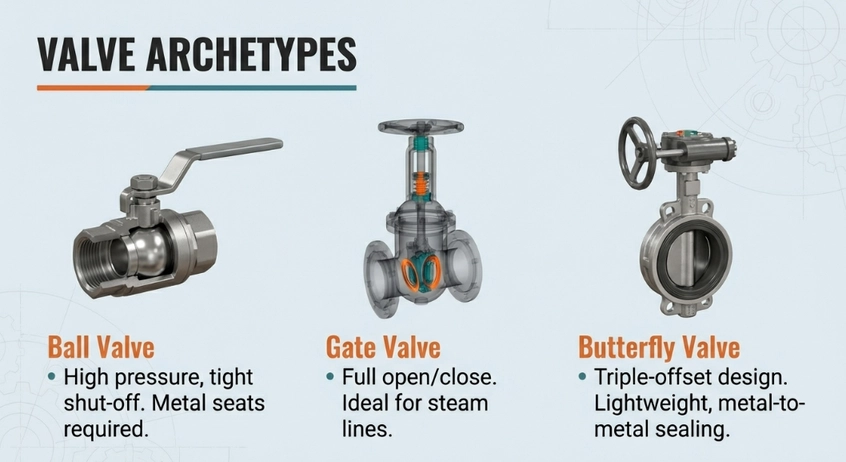
Different valve designs handle heat in different ways.
High Temperature Ball Valve
This valve uses metal seats instead of soft inserts. It suits high-pressure and fast shut-off applications where compact design matters.
High Temperature Gate Valve
Gate designs work well for full-open or full-close service. They are common in steam lines and large pipelines.
High Temperature Butterfly Valve
Triple-offset designs use metal-to-metal sealing and low torque operation. They are lighter than gate valves for large sizes.
Other Valve Designs
High-temperature check valves and high-temperature plug valves are also used where backflow prevention or flow isolation is needed.
Essential Design Features for Heat Resistance

Valve performance depends heavily on design details.
Extended Bonnets
Extended bonnets move packing away from the heat source. This reduces stem seal exposure and allows insulation around the body.
Live-Loaded Packing
Spring-loaded packing systems maintain sealing force during expansion and contraction.
Hard-Faced Seats
Seat surfaces are often coated with wear-resistant alloys. This helps reduce surface damage caused by hot fluid flow.
Applications of High Temperature Valves
These valves are used across many industries that operate under extreme heat conditions. In power generation, they control superheated steam in turbines and boiler systems. In petrochemical plants, they support cracking, reforming, and coking processes that run at elevated temperatures.
In chemical processing, they manage reactive fluids that require stable flow control under heat. In metallurgy, they regulate hot gases and furnace systems used in metal production. High pressure high temperature valves are critical where failure can stop production or create serious safety risks.
Conclusion
Choosing the right valve for heat-intensive service starts with clear planning and basic technical knowledge. When materials, pressure ratings, and design features match the application, systems run longer with fewer interruptions.
At YKY Valve, engineers focus on certified materials, controlled manufacturing, and tested designs for demanding systems. Explore our collection of industrial valves designed for high pressure high temperature valves applications, and consult a team that understands your system before problems start.
Reliability isn’t an accident. From raw material inspection to final pressure testing, see how YKY Valve ensures zero-leakage performance.
View Our Quality StandardsFrequently Asked Questions
1. What temperature defines high-temperature service?
It usually begins when standard valve materials and elastomer seals can no longer perform, often above 300 °C.
2. Can soft-seated valves be used at high heat?
Soft seats degrade quickly at high temperatures. Metal seats are normally required.
3. Why do pressure ratings drop with temperature?
Heat reduces metal strength, so valves need lower pressure limits to prevent failure.
4. Are special tests required for these valves?
Yes. Standards such as API 598 and ISO 5208 define leakage and pressure testing.