









A pipeline valve is a mechanical device used to control fluid flow inside a piping system. It opens, closes, or regulates flow to support safe and stable operation. This article explains how these devices work, the common designs used in pipelines, and where they are applied. It also covers materials, standards, and selection factors that affect system performance. Readers will gain practical knowledge to understand real industrial use cases.
What Is a Pipeline Valve?
A pipeline valve is installed within a pipe to manage the movement of liquids, gases, or slurries. It helps control flow rate, pressure, and direction.
Key Takeaways
- It controls how fluid enters, moves, or stops in a system
- It protects equipment from pressure overload and backflow
- It supports safe operation in industrial piping networks These components are essential in energy, water, chemical, and manufacturing facilities.
How Valves Control Fluid Flow
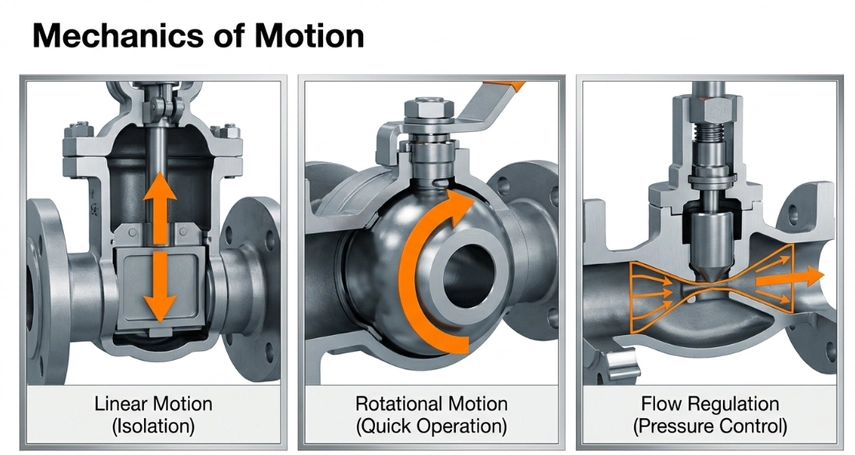
Flow control is achieved by moving internal parts inside the valve body. This movement changes the size or direction of the flow path.
Linear Motion Control
In linear designs, an internal gate or disc moves up and down. When fully open, fluid flows straight through with minimal resistance. These designs are common in isolation service.
Rotational Motion Control
Rotating designs use a ball or disc that turns inside the body. A quarter turn often opens or closes the flow completely. This allows quick operation in compact installations.
Flow Regulation Control
Some designs adjust flow gradually rather than fully opening or closing. They are used when pressure or flow must be controlled precisely.
Common Valve Designs Used in Pipelines
Different systems require different structures based on operating needs. Below are widely used types of pipeline valves found in industrial service.

Gate Valves
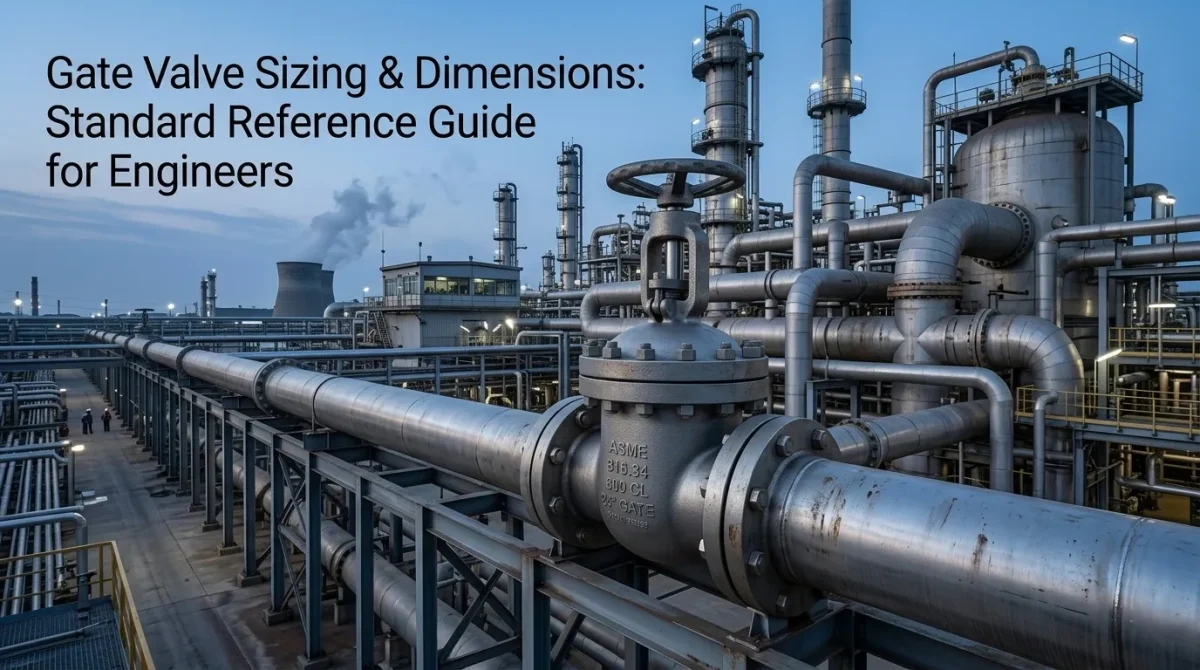
Gate valves allow straight-through flow when fully open. They are used mainly for on-off service. They perform well in large-diameter pipelines.
Globe Valves
These valves regulate flow by changing the distance between the disc and the seat. The internal path causes a pressure drop. They are common in steam and chemical systems.
Ball Valves
Ball valves use a drilled sphere to control flow. They provide fast shut-off and tight sealing. They are widely used in gas and liquid transport.
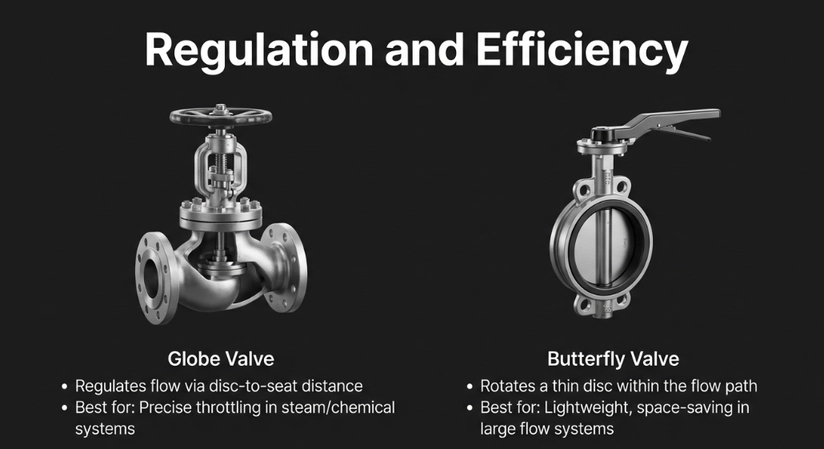
Butterfly Valves
Butterfly valves rotate a thin disc inside the flow path. They are lightweight and space-saving. They suit large flow systems with moderate pressure.
Check Valves
These open automatically when the flow moves forward. They close when flow reverses. They protect pumps and compressors from damage.
Diaphragm Valves
These isolate fluid using a flexible membrane. They reduce leakage and contamination risk. They are used in clean or corrosive processes.
Internal Parts and Their Functions
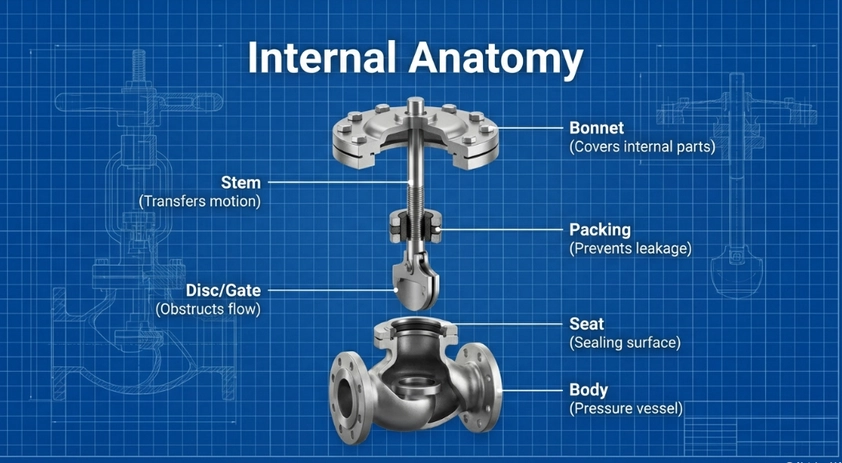
Each valve includes several parts that work together. Every component affects sealing, strength, and service life.
Main Structural Elements
- Body: Holds pressure and connects to the pipeline
- Bonnet: Covers internal parts
- Stem: Transfers motion from the handle or actuator
Sealing and Control Parts
- Seat: Forms the sealing surface
- Disc or gate: Opens and closes the flow
- Packing: Prevents leakage around the stem Material choice for each part affects durability and maintenance needs.
Materials Used in Valve Manufacturing
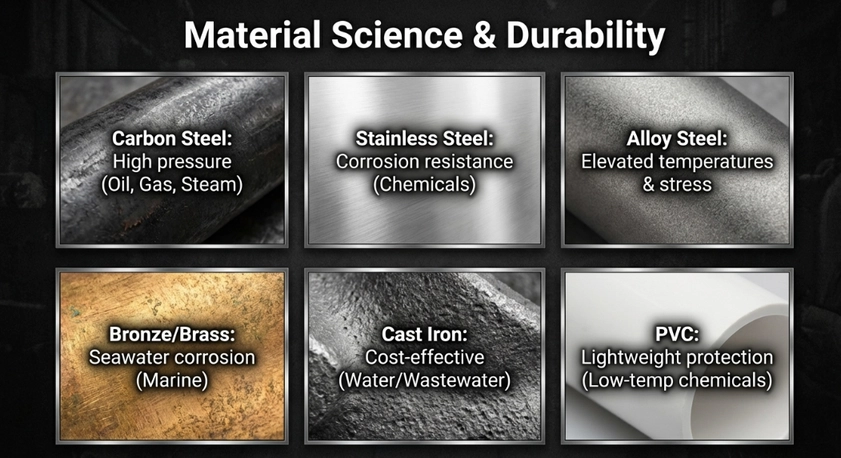
Material selection depends on pressure, temperature, and fluid properties.
Common Industrial Materials
- Carbon steel: Used in high-pressure systems such as oil, gas, and steam pipelines. It offers good strength and is suitable for moderate to high temperatures.
- Stainless steel: Chosen for corrosive environments involving chemicals or moisture. It resists rust and maintains strength across a wide temperature range.
- Alloy steel: Designed for elevated temperatures and high stress conditions. Added elements improve heat resistance and structural stability.
- Cast iron: Used in low-pressure water and wastewater systems. It is cost-effective but limited in impact and temperature resistance.
- Bronze and brass: Common in marine and utility services. These materials resist seawater corrosion and are easy to machine.
- PVC: Used for low-temperature chemical and drainage applications. It is lightweight and corrosion-resistant but unsuitable for high pressure. Each material balances strength, corrosion resistance, and cost.
Where These Valves Are Applied
The applications of pipeline valves vary across industries. Each sector has different operating conditions and risks.
Oil and Gas
Used in extraction, transport, and refining systems. They handle high pressure and wide temperature ranges.
Chemical Processing
They control corrosive and reactive fluids. Material compatibility is critical. For systems requiring strict adherence to international norms, an api gate valve is frequently utilized to ensure safety.
Water and Wastewater
They manage large volumes at lower pressure. Ease of maintenance is important. In these networks, a gb swing check valve may be installed to prevent backflow and protect equipment.
Power Generation
They control steam and cooling water. High temperature resistance is required.
Pharmaceutical and Food
They support clean processes with smooth internal surfaces. This helps reduce contamination risks.
International Standards That Govern Valve Design
Industrial valves must comply with global standards. These ensure safety, testing consistency, and interchangeability.
API Standards
- API 6D defines design and testing for pipeline service.
- API 598 specifies pressure and leakage tests.
ASME Standards
- ASME B16.34 defines pressure-temperature ratings.
- ASME B31 piping codes guide system design.
ISO Standards
- ISO 14313 aligns with API requirements.
- ISO 5208 defines leakage classification levels. Standards help buyers compare products across suppliers.
How to Choose the Right Valve
Selecting the correct unit reduces failure risk, downtime, and unplanned maintenance. The decision should follow a clear evaluation process based on actual service conditions.
- Define operating limits: Confirm the maximum working pressure and temperature, including short-term peaks.
- Identify the fluid: Determine whether the media is corrosive, abrasive, flammable, or clean. This directly affects material and seal selection.
- Decide the valve function: Clarify whether the valve is used for shut-off, isolation, or flow regulation. For precise throttling, engineers often choose a gb globe valve to manage flow characteristics.
- Review installation conditions: Consider space limits, orientation, and whether the valve is indoors or outdoors.
- Plan for maintenance: Assess how often inspection or replacement will be possible in the installed location.
- Evaluate total cost: Compare initial purchase cost with expected service life and maintenance effort.
Following this process improves system stability and supports long-term operation.
Conclusion
Reliability isn’t an accident. From raw material inspection to final pressure testing, see how YKY Valve ensures zero-leakage performance.
View Our Quality StandardsUnderstanding how these components work helps reduce system risk. It also supports better planning and maintenance. Many engineers choose a collection of industrial valves matched to real operating conditions. YKY Valve supports global projects with ISO and API-certified designs and application guidance. Learn more about their engineering approach here.
Frequently Asked Questions
1. What does a valve in pipeline systems do?
It controls fluid flow, pressure, and direction inside pipes.
2. How many types of valves in pipeline systems exist?
There are many designs, including gate, globe, ball, butterfly, and check types.
3. Are valves for pipelines standardized?
Yes. Most follow API, ASME, or ISO standards.
4. How often should they be inspected?
Inspection frequency depends on service conditions and industry regulations.