









Quick Answer
High-temperature valves control fluid flow above 200°C, requiring special materials, metal-to-metal seals, and precise clearances to manage thermal expansion. Material selection, from carbon steel to nickel alloys, is critical for strength and corrosion resistance. Proper design, surface treatments, and actuation choices ensure safety and longevity. Following standards and maintenance practices, such as re-torquing and using appropriate lubricants, extends service life and prevents failure in demanding industrial systems.
A high-temperature valve is engineered to control fluid flow in systems operating above 200°C. They require special materials, sealing methods, and internal clearances to stay functional under heat and pressure.
This guide explains how these valves work, what design factors matter most, and how proper selection improves safety, uptime, and service life.
Understanding What “High Temperature” Means in Valve Design
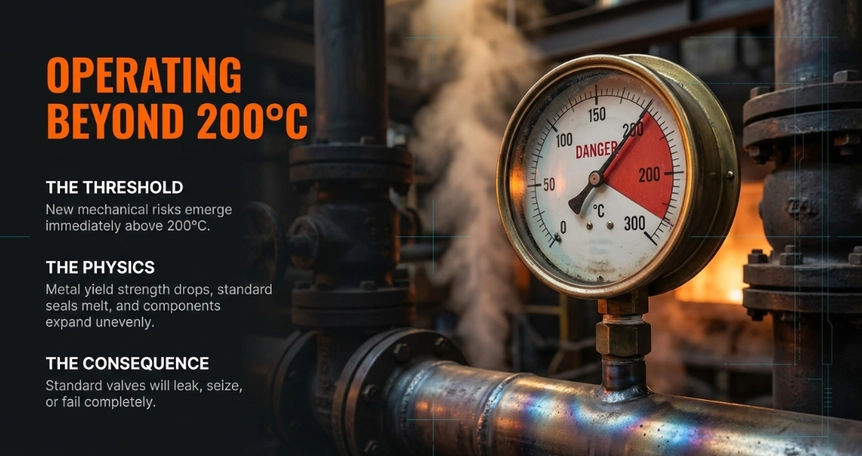
In industrial piping, temperatures above 200°C create new mechanical risks. Metal strength drops, seals fail, and moving parts expand. Standard valve designs cannot handle these changes.
Engineers define service limits using pressure–temperature charts. These charts help match valve materials to real operating conditions. Choosing beyond rated limits often leads to leakage or seizure.
Heat also accelerates corrosion and surface wear. This makes material selection and internal geometry more important than valve size alone.
Selecting Materials That Withstand Heat Stress
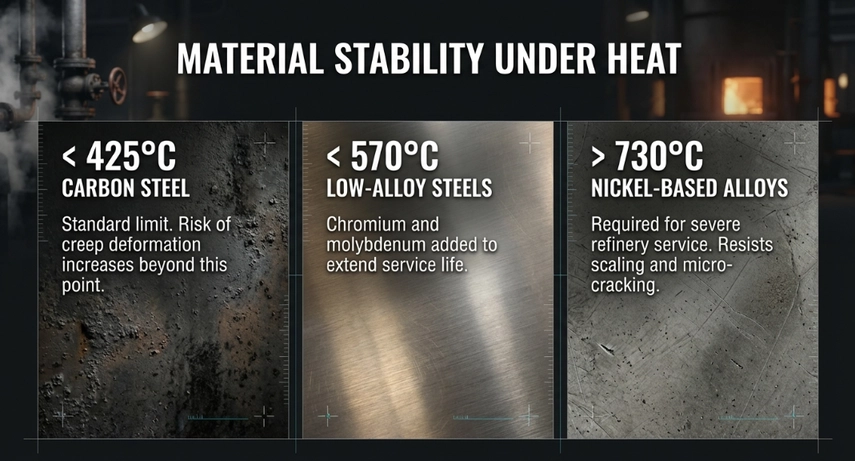
Material choice is the foundation of thermal performance. Metals lose yield strength as temperature rises. The wrong alloy can deform under load.
Carbon steel works up to about 425°C. Beyond that point, creep deformation becomes a concern. Low-alloy steels with chromium and molybdenum extend service up to roughly 570 °C. For example, ASME SA-335 Grade P11 (1.25Cr-0.5Mo) is commonly limited to about 570 °C (1050 °F).
For higher ranges, high-temperature stainless steel ball valves are often selected. Stainless steel resists oxidation and maintains mechanical stability when exposed to hot steam or corrosive media.
Above 730°C, nickel-based alloys are used. These alloys resist scaling and micro-cracking in furnaces and power systems. They are common in severe refinery service.
Designing for Thermal Expansion and Clearance Control
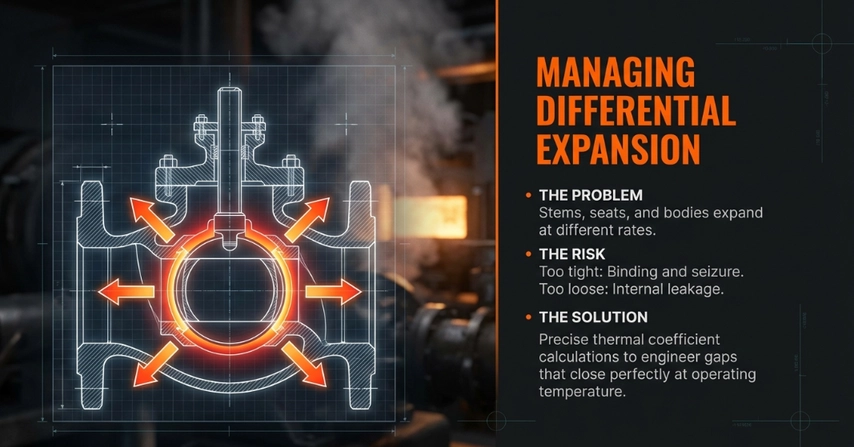
All metals expand when heated. In valves, different parts expand at different rates. Balls, stems, and seats rarely use identical alloys.
If internal clearance is too tight, parts bind during operation. This can prevent an emergency shutoff. If the clearance is too loose, leakage occurs.
Engineers calculate expansion using thermal coefficients. Small gaps are built into the design. These gaps close at operating temperature.
This design approach is critical in any high pressure high temperature valve used in steam or thermal oil systems.
Thermal cycling adds another challenge. Repeated heating and cooling loosen fasteners. Elastic seat designs and spring-loaded components help absorb movement.
Engineering Sealing Systems for Extreme Heat
Soft seals fail quickly in hot service. Elastomers melt, harden, or crack. For this reason, metal-to-metal sealing is standard.
The ball and seat are machined and lapped to tight tolerances. This creates a seal without polymers. Hard-faced coatings further protect contact surfaces.
Stem leakage is controlled using high-temperature valve packing. Graphite and carbon-based packings remain stable at elevated temperatures. They also allow smooth stem movement.
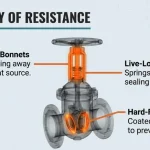
In severe service, live-loaded packing systems are used. Springs maintain compression as materials expand and contract.
Managing Wear With Surface Treatments
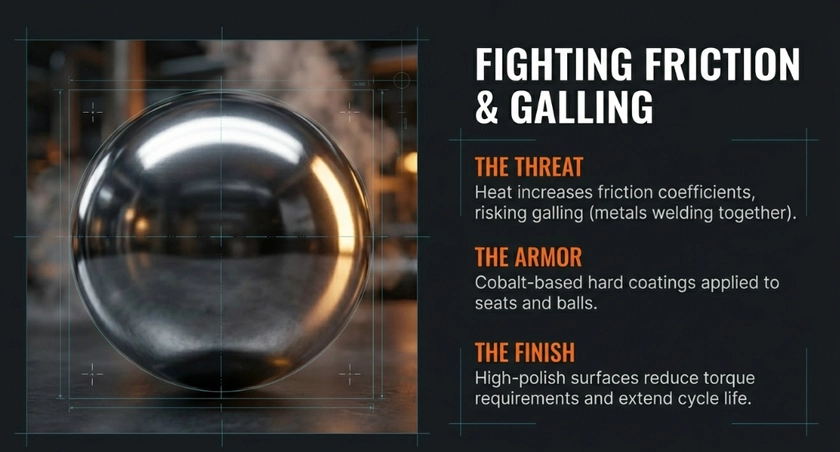
Heat increases the friction between metal parts. Without protection, galling can occur. This damages sealing surfaces.
Hard coatings such as cobalt-based alloys are applied to seats and balls. These coatings resist abrasion and maintain smooth contact.
Surface finish also matters. Polished sealing areas reduce torque and extend cycle life. This is essential for automated systems.
Choosing Actuation Systems for Hot Environments
Valve actuators are sensitive to heat. Direct exposure shortens seal and electronic life.
High-temperature valve actuators are often mounted with extension bonnets. This increases the distance between the heat source and the actuator components.
Pneumatic actuators are common in high-heat zones. They tolerate ambient temperature changes better than electric units.
Torque calculations must account for metal expansion. Undersized actuators may stall at temperature.
Using Proper Lubrication Under Heat
Standard oils evaporate at high temperatures. Loss of lubrication increases wear and operating force.
High-temperature valve grease uses synthetic bases or solid lubricants. These materials remain effective where oils fail.
Proper lubrication reduces stem torque and prevents scoring. Maintenance intervals should match operating cycles.
Selecting and Comparing High-Temperature Valve Types
Valve designs react differently under extreme heat. Temperature changes affect sealing, wear, and ease of operation. Choosing the right type helps reduce maintenance and keeps the system stable.
| Valve Type | Description |
| Gate Valves | Used for full open or full close service. In high-heat systems, they are mainly used for steam isolation, such as the api gate valve. |
| Globe Valves | Control flow accurately. Their internal design allows precise adjustment at high temperatures. |
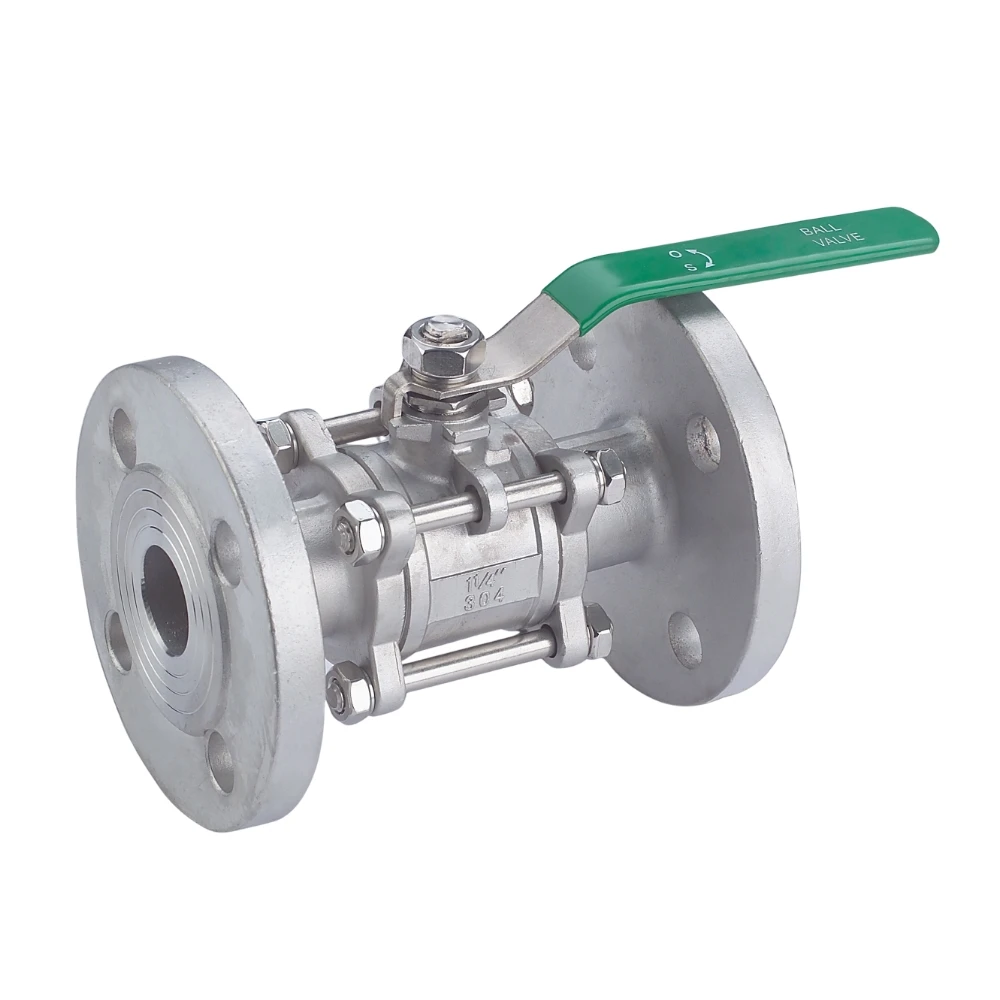
| Ball Valves | Provide fast quarter-turn operation. Metal seated ball valves for high temperature handle heat and pressure without soft seals. |
| Butterfly Valves | Compact and lightweight. Offset designs reduce seat contact and limit wear in hot service. |
Each valve type has a specific use. Selection should match temperature, pressure, and how often the valve operates.

Operational Practices That Extend Service Life
Routine inspection is essential. Packing areas should be checked for vapor leakage.
Bolted joints should be re-torqued after thermal cycling. Expansion can reduce bolt preload.
Correct grease should be applied during scheduled maintenance. Using the wrong lubricant shortens service life.
Standards such as API and ASME define testing and design rules. Compliance ensures pressure containment and sealing performance.
Manufacturing and Quality Controls That Matter
Valve performance depends on manufacturing accuracy. Dimensional control affects sealing and torque.
YKY Valve applies CNC machining to critical surfaces. Each valve undergoes pressure, sealing, and functional testing under ISO and API 598 standards.
Material traceability and inspection help prevent early failure. This is especially important in heat-intensive systems.
Conclusion
Reliability isn’t an accident. From raw material inspection to final pressure testing, see how YKY Valve ensures zero-leakage performance.
View Our Quality StandardsDesigning valves for extreme heat requires more than selecting thicker metal. It involves material science, thermal calculations, and precise machining.
At YKY Valve, engineers focus on industrial valves designed for thermal stability. Explore our collection of engineered valve solutions and consult a team that understands your system before problems start.
Frequently Asked Questions
1. What temperature range requires a special valve design?
Temperatures above 200°C require heat-resistant materials and metal seals.
2. Why are metal seats used instead of soft seals?
Soft seals degrade under heat. Metal seats maintain shape and sealing ability at elevated temperatures.
3. How does thermal expansion affect valve operation?
Heat causes metal parts to expand. Designers add clearance, so parts move freely without jamming.
4. What packing materials work in hot service?
Graphite and carbon-based packings withstand heat and allow smooth stem movement.