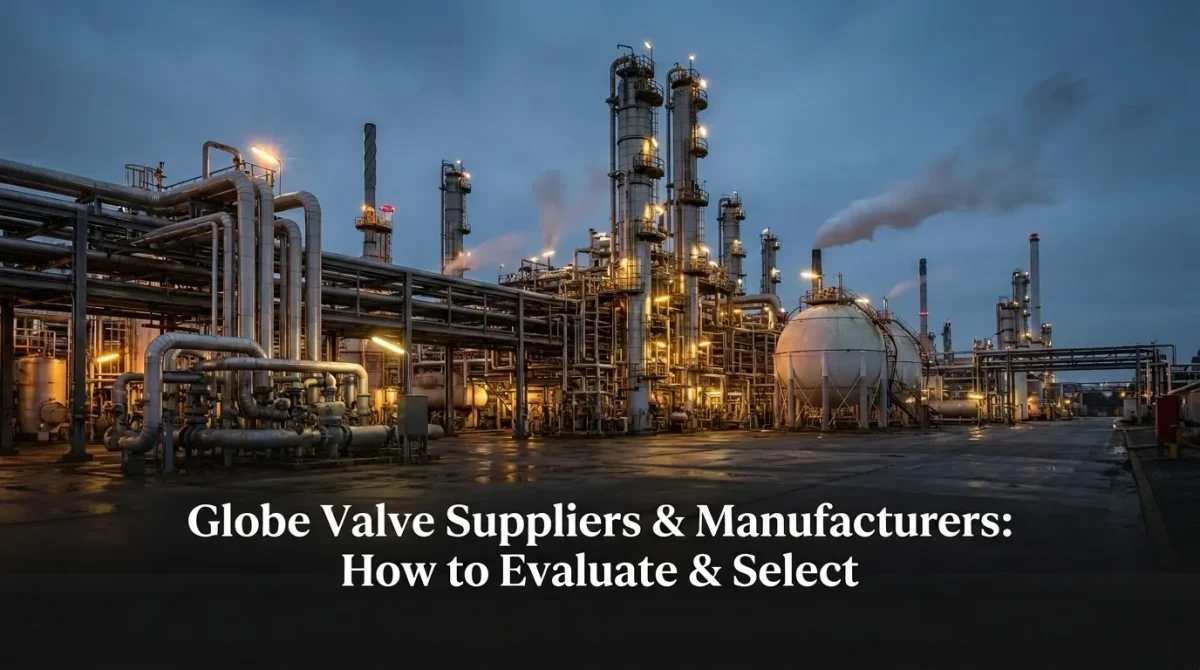










Besides the cost, globe valve suppliers should be checked for certifications, material traceability, lead times, and technical support. The selection process also evaluates trade-offs when sourcing globally, especially among China, US, and Europe-based suppliers.
Discover what criteria to consider when comparing globe valve manufacturers and how international standards and custom solutions should affect buying decisions.
Evaluation Criteria for Globe Valve Manufacturers
When vetting globe valve providers, these critical indicators must be considered to determine supplier reliability:
Industry Certifications
| International Standard | Description |
| API 623 | The American Petroleum Institute (API) benchmark for steel globe valves; ensures compliance with design, wall thickness, stem diameter, and performance requirements for high-pressure service. |
| ASME B16.34 | The American Society of Mechanical Engineers (ASME) standard for pressure-temperature ratings, material requirements, and dimensional criteria for welded, flanged, and threaded valves. |
| ISO 9001 | The International Organization for Standardization (ISO) standard for Quality Management Systems (QMS); shows whether a manufacturer has maintained a documented QMS with consistent inspection and production processes. |
| GB/T 12235 | The Guobiao Tuijian (GB/T) or voluntary national standards of China for globe valves; commonly specified for projects following Guobiao (GB) or international engineering standards. |
Material Traceability and Quality Assurance
Professional globe valve suppliers must provide Material Test Reports (MTRs) upon request in accordance with the European Norm (EN 10204 3.1 or 3.2). These standards allow buyers to verify the mechanical properties and chemical composition of the produced valves.
The 3.1 inspection certificate is issued by the manufacturer’s quality assurance department and signed by an authorized representative independent of production. It covers specific batch test results for chemical analysis and mechanical properties.
The 3.2 inspection certificate is issued by an independent third party and signed by both the manufacturer’s representative and an authorized inspector appointed by an official regulatory body or the purchaser. It consists of the same data as the 3.1 certificate but is validated, reviewed, and witnessed by the third party.
Additional quality assurance measures include a rigorous 6-stage quality check that starts with Positive Material Identification (PMI) to confirm alloy grades. This is followed by hardness testing before or during production on every alloy heat.
Outside of batch sampling, it is recommended that every disc-to-seat pair be subjected to hydrostatic shell tests at 1.5 times rated pressure and seat tightness. This is in accordance with API 598, the standard for factory inspection and pressure testing of gate, globe, ball, check, and butterfly valves. GB/T 13927 is the corresponding national standard for pressure testing in China.
Technical Support and Documentation
A qualified industrial globe valve supplier must provide in-depth engineering documentation such as:
| Documentation Type | Description |
| CAD drawings | PDF or DXF files providing detailed and accurate piping system integration. |
| Dimensional tables | Piping layout specifications and measurements for boiler feed, drainer service, and other space constraints. |
| Flow calculations | Flow coefficient (Cv) data and equal/linear-percentage characteristics for control loop modeling. |
| Performance charts | Pressure-temperature (P-T) ratings to verify the valve’s operational envelope for specific process media. |
Global Sourcing Trade-Offs: China vs. US vs. Europe
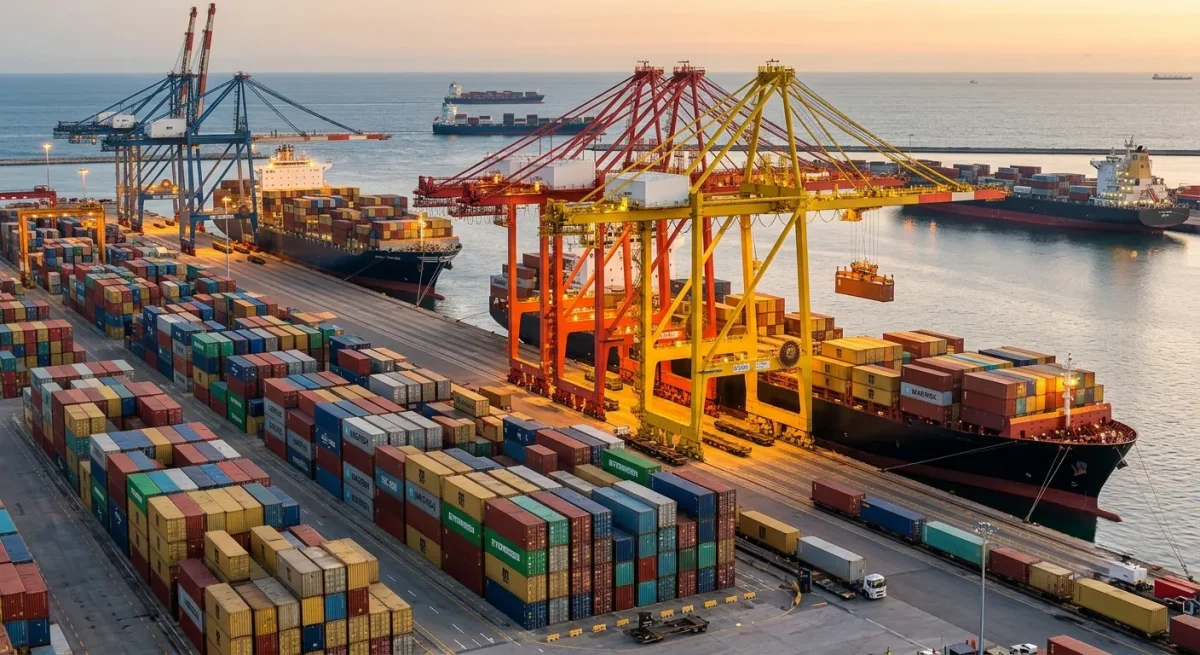
Each manufacturing region provides distinct advantages and trade-offs depending on project complexity, budget, and delivery time.
China for Factory-Direct Value
Established production hubs such as Zhejiang province produce globe valves for industries ranging from oil and gas to wastewater treatment. Buying directly from a custom globe valve manufacturer in China eliminates intermediary markups, resulting in 10% to 30% lower cost than international resellers.
To distinguish manufacturers from trading companies, buyers must prioritize vetted suppliers like YKY Valve. These offer factory-direct GB and API globe valve product lines that meet industry certifications while closing the ‘sample-to-bulk’ gap.
US for Compliance and Speed
Manufacturers in the United States are preferred for projects requiring ‘Made in USA’ documentation, domestic sourcing, and speed-sensitive supply chains. It also eliminates the risks associated with customs documentation and international shipping.
The trade-off is higher per-unit labor costs, with some suppliers requiring larger minimum order quantities for custom-engineered valves. However, when factoring in import duties, ocean freight, and replenishment cycles, the total landed cost can be closer to Asian sourcing.
Europe for Premium Engineering
European manufacturers are globally recognized for specialized designs and exotic material requirements. Their strict adherence to international standards makes them the top choice for demanding applications involving complex process requirements and high pressures.
Their expertise often comes with higher landed costs and longer lead times compared to Asian manufacturers. Buyers typically reserve European sourcing for niche applications while relying on China-based providers for high-volume, standard API and GB globe valve sourcing.
The GB Gate Valve is engineered for reliable performance in industrial applications, including chemical, petrochemical, and power industries.
Explore Product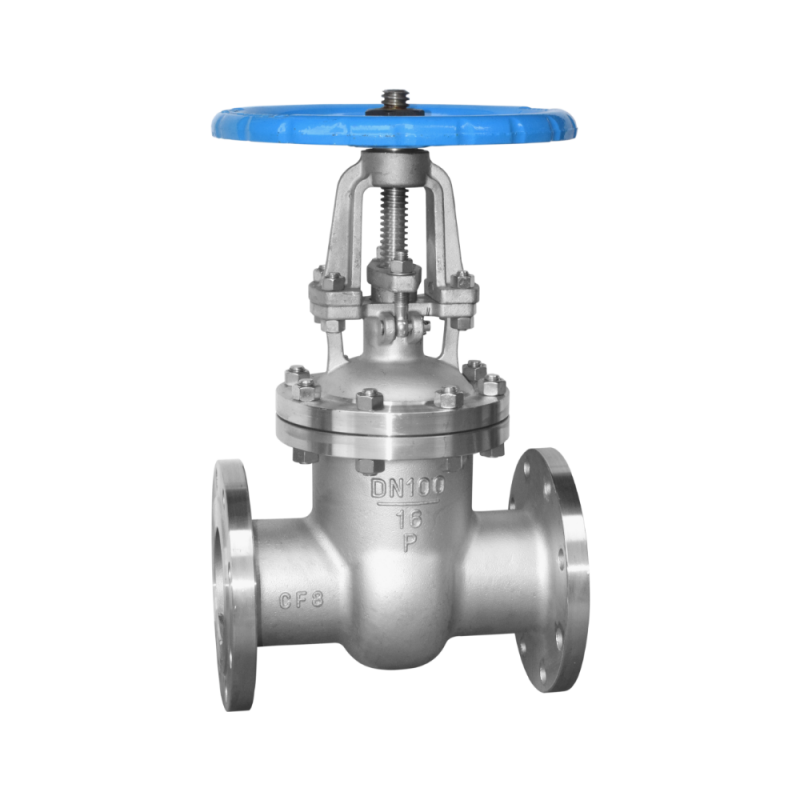
Standard vs. Custom Globe Valve Suppliers
Standard valves meet the requirements of many industrial applications, but custom-engineered solutions are needed for specialized processes.
When Standard Globe Valves Are Sufficient
These designs are suitable for general service applications handling steam, oil, water, and other common process media. They come in a wide range of sizes, pressure classes, and end connections for cost efficiency and shorter lead times.
When Custom Globe Valves Are Necessary
A custom globe valve manufacturer like YKY is crucial when standard designs cannot meet operational safety, automation, or environmental requirements. Key scenarios calling for custom valves include:
| Custom Globe Valve | Industrial Application |
| Bellow seal | For toxic, hazardous, and environmentally sensitive media like chlorine and ammonia synthesis to minimize fugitive emissions. |
| Actuated | For automated modulating control using pneumatic or electric actuators with positioners in distributed control systems (DCS). |
| Exotic alloy | Produced using Hastelloy C276, Titanium, or Monel to withstand seawater and aggressive chemicals such as hydrochloric acid. |
| Specialized body patterns | For Y-pattern or angle globe valves to reduce direction-change turbulence and pressure drop in high-pressure steam pipelines. |
For additional buyer context on material-specific guidance, refer to the article on Different Types of Stainless Steel Globe Valves.
Industrial Globe Valve Supplier Checklist
Before buyers and procurement professionals place an order, use this checklist:
- Verify the API, ASME, ISO, GB, and other industry certifications of the globe valve manufacturer to guarantee compliance with design and thickness standards.
- Request material test reports (MTRs) to confirm material traceability along with the chemical and mechanical properties of the alloys used.
- Confirm that every valve unit has undergone 100% individual pressure testing before shipping rather than relying on batch sampling.
- Check the availability of technical documentation from globe valve suppliers for accurate integration into the existing industrial system.
For those also evaluating isolation valves, refer to the Guide to Stainless Steel Gate Valves to understand when gate valves are the better choice for the service application or if an industrial globe valve is best.